EpisodeTalks with Petri
Rudeboy makes people feel the beat
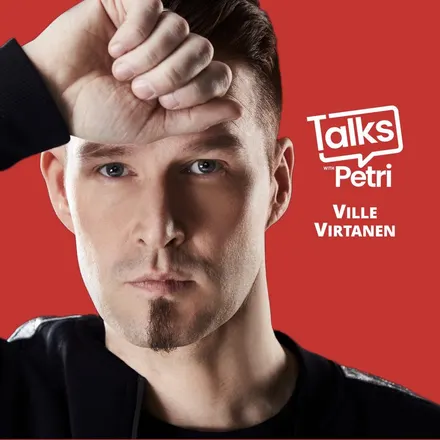
With Ville Virtanen
Ville Virtanen talks about what happens when you are hit by Sandstorm and how to cope with expectations, success and stay relevant over time. This episode is totally out of control so just feel the vibe and tune in.
Ville Virtanen - TALKS WITH PETRI
Ville Virtanen talks about what happens when you are hit by Sandstorm and how to cope with expectations, success and stay relevant over time. This episode is totally out of control so just feel the vibe and tune in.

Rudeboy makes people feel the beat
Ville Virtanen talks about what happens when you are hit by Sandstorm and how to cope with expectations, success and stay relevant over time. This episode is totally out of control so just feel the vibe and tune in. See the episode …
Bio
Famed for the global platinum-selling smash ‘Sandstorm’, Darude is recognised as one of the most influential artists to emerge from the dance scene. With a DJ style that is a mixture of progressive and uplifting trance, fused with elements of tech, breaks and house, Darude’s music delivers a dynamic energy that gets any dance floor moving.
With over 15 years of heavily touring North and South America, as well as leading shows in Asia and Australasia his resume of accolades is a testament to the exponential growth of his profile as an international artist. Over the years he’s appeared on TV channels such as BBC, NBC, CNN and MTV, as well as having won several prestigious awards such as 2 x German Dance Awards, Dance Star Award, USA Golden Turntable DJ Award and he is a 3 x Finnish Grammy Award winner. His name has also appeared in numerous public-voted polls with previous entries in Top 100 DJs Poll and Americas Favourite DJ.
Website | Twitch | Twitter | Instagram | Links | Wikipedia
 Play video
Show notes
- How Darude became an Internet meme
- Sharing your knowledge with others
- Showing vulnerability in your work
- Streaming in the 2020s (Twitch, Instagram, FB, TikTok)
- IRL and online communities
- Revenue streams for music creators
- How to cope with corona times without performing live
- Balcony Darude as a Corona time phenomenon
- Meaning of success
- How it all started and the making of Sandstorm
- Ville’s career aspirations and his early rejections by labels
- Storytelling in the marketing of Sandstorm
- JS16 and the Finnish Denniz Pop & Max Martin
- Agile development in music-making
- Creating music and making hits based on audience responses
- Expectation and influence management
- Changes to music due to COVID-times
- Skateboarding and TikTok
- Distractions in the creative process
- Changes in the listening behaviour and technology over the decades
Show links
https://www.youtube.com/watch?v=y6120QOlsfU (Darude - Sandstorm)
https://www.instagram.com/p/CK6YoeHBo6V/ (Elon Musk’s tweet)
https://www.youtube.com/watch?v=1QSNGL53J8M Parvekedarudet (balcony darude)
https://www.instagram.com/p/B-y_gGSFYw1/ (Ironing it out)
https://trends.google.com/trends/explore?date=all&q=darude%20sandstorm (2014 Google trend)
https://www.youtube.com/watch?v=l-JeMcfeLTE (The Story of Sandstorm)
https://www.netflix.com/ee/title/81050786 (This Is Pop, Netflix; Stockholm Syndrome episode)
https://www.instagram.com/p/BT5jFerh4RX/ (Robert Miles)
https://www.instagram.com/p/aOFhuquIC2/ (Rejection letter – Poko)
https://www.instagram.com/p/aOFVgjuICm/ (Rejection letter – Sony)
https://www.instagram.com/p/aOEn-duIB0/ (Rejection letter – EMI)
https://www.reddit.com/r/Music/comments/4updgu/ama_im_darude_ask_me_anything/ (Reddit AMA)
(photo credit Nana Simelius)
- 0:03 Elon Musk tweets Sandstorm
- 1:50 The “what song?” meme and the 2014 Google Trends peak
- 6:57 First music on cassettes
- 7:52 TwitchCon and starting to stream
- 10:10 Streaming the production process live
- 15:14 How Twitch, Facebook and YouTube audiences differ
- 21:06 Soundcheck streams and life on tour
- 25:58 The streaming community and its size
- 30:09 Subscriptions, donations and what streaming pays
- 32:09 The crowd during the lockdowns
- 38:01 The balcony Sandstorm and the hospital gig
- 46:29 Growing up with music, without lessons
- 50:52 The first tracks: trial and error
- 54:53 The demo to JS16 and how Sandstorm happened
- 58:37 Making the most of it: MP3.com, BBC and the release
- 1:04:34 The first music videos
- 1:10:54 From Rude Boy to Darude: the name and the logo
- 1:16:50 Denniz Pop, Max Martin and Eurovision 2019
- 1:23:48 What makes a dance-floor hit
- 1:30:33 Getting better as a producer after 20 years
- 1:37:43 Back to feeling-based music
- 1:41:39 Skateboarding, TikTok and YouTube Shorts
- 1:46:05 The music business in the pandemic
- 1:48:00 How Sandstorm was mixed live
- 1:51:03 Hardware, committing to decisions and 800 plugins
- 1:56:02 Too much music: albums and playlists
- 2:01:00 Saying “I love you”, the Finnish way
- 2:04:08 Quick questions
- 2:12:02 A closing quote
Transcriptmachine transcription · 2:12:50
Transcribed from the recording by machine (Whisper): it may contain errors.
0:03 This is Talks with Petri show and today's guest is Ville Virtanen. Welcome. Hello, what's up my man? So great to have you man. How did it feel or how did you actually find out that Elon Musk tweeted your masterpiece? uh i found out because about a zillion people uh at tweeted me and insta'd me and and even some text messages and stuff um and i think i was uh also criticized or called the simp and all kinds of stuff because i was too quick to respond to it apparently according to the internet uh laws and uh so what is too quick i mean that you were the first one or no no no i think it was like within the hour or something like that uh but yeah it was um i i highly uh respect mr musk is uh you know obviously the the serial entrepreneur he is he's changed the world with many things already and keeps on doing so apparently uh has no limits in in that so it was cool to have him mention the name of my track and uh we still don't 100 know it it meant that or if it was about any other of his things but uh i've decided to take it as it was a reference to to sandstorm and and that's my story and i'm sticking to it yeah i remember you you answered something like Yeah, thanks so much, man. And if it's not me, I take my coat.
1:50 Yes. This is not the first time you've been, well, you're like, there's been other stuff happening as well. Early on, 2014, you were part of a Google Trend peak, and that was a huge peak. What happened then? Do you remember? If you mean the what song thing? Yeah, I think that's probably, yeah. Or the April Fool's Day. Yeah, April Fool's. You were in Google's April Fool's. Yeah, yeah. That was, I think, related to the peak, but maybe it was starting early on when people went. Yeah, I mean, that started a little earlier on the sort of what song meme thing, and that's related to eSports.
2:46 And I guess some, but specifically to one gamer who would be always apparently listening to Sandstone when he was ruling killing everyone or beating every opponent and whatnot. And then people would come to his stream and they would be asking what song. And it got so frequent, the asking, and then people in a chat responding, oh, it's the Root Sandstorm, or he did. And so everyone just started responding to Root Sandstorm, whatever the song was at one point. And it was rather weird and interesting at one point when my Facebook and Twitter and also YouTube, obviously, got flooded with what song, what song, the root sandstorm and and i was not in on a joke in the beginning so i was like look at the description the name of the track is there and people were like oh duh and um so so it grew and the the youtube thing that the april fools that i referred to um it's a quite interesting story in a way because we had that in our minds ourselves and we already had contacted that april before April Fool's Day, we had contacted Shazam about a similar thing, but they never got back to us on time. And weirdly enough, we got a call from YouTube asking if we'd like to do this gag with them. And hey, YouTube asking something like that, I'm going to say yes, you know, faster than the speed of light uh it was crazy like you can't buy that kind of advertisement even if you wanted to probably and um it was obviously huge for for my my name you know peak wise what 24 hours the the youtube hits and everything was just through the roof of course
4:59 uh and we were actually using it because i was about to release a track but it was supposed to be a couple weeks later and then when this happened we got the call from youtube we made um my poor music video editor almost kill himself with work because he needed to get it done not in two weeks but in like two days and he got it done my beautiful alien music video and it was actually out the same morning then uh the the prank thing started happening and we linked from sandstorm to uh the beautiful alien alien video and we got i think 250 000 hits within a day just as a side product of all the sandstorm hits that were like over 2 million that one day.
5:53 Because every search you did on YouTube yielded, did you mean, the root sandstorm, whether you search for Metallica or, I don't know, Beatles and such. And it was hilarious watching the comments. it was weird and just basically real time looking up the stats like reloading youtube stats and the graphs went to skyrocket and it was kind of it was insane you started streaming online streaming way before the corona times was it 2015 and i think you attended the very first and performed in the TwitchCon. Yeah, yeah, we, that's also the gamer connection. Weirdly enough, I'm not a gamer myself that much. Like, obviously, I know of computer gaming and the consoles and everything, but the last time I really considered myself a gamer was Commodore 64 times in the 80s.
6:57 Is it C cassette or floppy? That's the crucial question. Cassette, of course, and not even those manufactured ones with the screw on, you know, built in. But I had my own screwdriver and needed to adjust the angles myself for certain tapes, different angles and whatnot. That was interesting. But so over the years, obviously, you know, I've played a rally game here and, you know, shoot them up there and whatnot. but I'm not a regular gamer, but there's a huge overlap, apparently, between gaming and electronic music and electronic dance music. And I have a lot of fans on the gaming side. And then this gaming meme, the What Song and all that, sort of connected me with the gaming world.
7:52 And basically, I don't remember who contacted who, but we got in touch with Twitch, and they were asking me to do that TwitchCon. i think i'd done like a uh a dream hack or something else before that and i've also did a valve uh ti 4 maybe which is one of their big uh annual gaming happenings and so when i got in touch with twitch we just kind of clicked they're good people and and i i did the twitch con and then obviously there was a obvious sandstorm thing so we actually did one of the streams was 24 hours of sandstorm wow just on repeat yeah which which i didn't have much to do other than it was just put on and uh you know they showed me the ropes with twitch and basics just streaming like obviously i had uh you know been on camera before i had done streams before but they were always like technically organized by somebody else and i went somewhere and did something whether it was playing or interviews or or podcast type of things and whatnot but now i started doing it from from my studio here and uh in the beginning it was very very sort of random and i uh was trying to get you know familiar with the equipment with the technology uh initially it was just like like my laptop crappy camera and and at some point even the first video you can still see is like test yeah you really like testing you know yeah exactly and it was maybe 50 views yeah it was troubleshooting live stuff and um but it was cool because i found a community that was very um i don't know they were it felt very genuine warm it felt a weird like a weird community but in a good way i by no means that's a bad thing um and uh i over time over a few weeks
10:10 and months i actually started feeling comfortable enough that i would actually start streaming my production process live which i'd never ever let anybody in you know at all other than of course my collaborators but um even even when i make music in my professional life with with people who i collaborate with often the actual production process it's it's me alone after we've composed tracks or had vocals recorded or or um you know the idea is done and then i just like become a hermit and start tinkering and um it's very um i thought that it's very private that i could never do it sort of in public but but even now if you go to my twitch channel you'll find a couple of remixes and a couple of um uh track sessions that are some of them are hours long where basically people can kind of like overlook my shoulder and see me trying to play melodies and mess up and try again and and just kind of and it felt embarrassing here and there and uh it it felt very i was very self-conscious about all kinds of stuff but it actually helped me because uh while i knew people are watching sometimes five sometimes 50 sometimes couple hundred um it's not in my studio so it's not the same but at the same time there's an awareness somebody's seeing how good or bad i am at what i do but i also realized that nobody else does what i do and it's my thing and most of the people watching were total uh noobs in production or not producers at all so basically anything i did was more than what they know and that was a very very needed revelation for me so you know you know what you are good at or you know what you do
12:22 and and that really like gave me um confidence sort of going forward that hey i you know i know my shit sort of and i don't know about you or or anybody viewing this but like even after 20 years in in the business i have insecurities and i i have things that i don't necessarily want people to know about me or or um find out if i'm good or bad at or that but so streaming it's it was sort of natural and i've started uh showing people more and more and i like in fact i'm not a great piano player at all or keyboard player but i've i've many a times messed around with my keys trying to find melodies and chords and this and that and um kind of not caring if i and more and more being able to let go of the embarrassment if i if i mess up something um so so that that was cool. But then, you know, touring, family, I've got a wife and two kids, a couple of hobbies.
13:35 It takes a lot of time. So I never then did regular streaming. So it was very random, sometimes two or three times a week. Sometimes there was a month of gap. And so it didn't kind of grow. Like a lot of people who start streaming, they have a plan and they organically want to grow and systematically and so on but i didn't have that then because i didn't feel i didn't know that it would be something that i needed or wanted to do um growth wise as an artist uh but it was just an outlet to to and i explored it but so uh it wasn't until the unfortunate coronavirus pandemic and the lockdowns when I started regularly streaming. You were doing that all the time since 2015.
14:27 You didn't basically stop. You just did it more intricately. I didn't stop. I never said, no, I'm not going to stream or I'm stopping streaming or whatever. But I had sometimes a couple of months of gap and then I just turned on Twitch again. And then when I was on the road, I wasn't actually that much streaming on Twitch, for instance, but I went to just like a mobile phone route, did Facebook lives or Instagram lives for my sound checks and sometimes part of my shows and whatnot. So streaming has been part of my thing, even as an artist, but not as much the sort of organized and systematic Twitch streaming. Did it connect for your live audiences when you went to the gigs and sort of in real life?
15:14 This is before Corona time. or was it sort of did it feel like a different you know sort of isolated thing was the audience different or how did it feel i find i find that um the audiences are different from different platforms to one another like um for instance twitch initially was a gamer uh platform only And then around 2015, 16, they started bringing in more of the creator side, the artist side. There were people like myself and then Deadmau5 and obviously many, many other artists, producers as well, singers, songwriters and whatnot. Because I guess they realized that they wanted to and they had a platform that they can also expand that way. But because of the gaming connection, the gamers, and sorry if I'm just throwing like a blanket statement here, but the gamers usually seem to, you know, they lurk.
16:17 You know, if they're following their favorite gamer, they can have their, you know, stream on for hours. And they just watch and sometimes they're active in the chat all the time, sometimes not. They can do chores and go to the store and come back to the stream, but they've had the stream on all the time. So there's this long attention span that is associated. Clearly, I noticed that with Twitch. So when I started doing the production streams, I could do that. I could have a five-hour session here. I could even say, hey, guys, I got to go get lunch, 15 minutes, come back and continue, and people would still be there. Try that on Facebook. Facebook crowd, again, a blanket, you know, stereotyping statement. But they are like, hey, give me the hit song, preferably in a condensed form factor, right now.
17:10 And then if it goes more than, you know, half a minute to the main thing in the song, they're out of there. Like, it's more like, you know, the Spotify and radio edit version of everything. Because I've tried streaming the production sessions on Facebook as well. And, you know, people come in, but they also drop out really quickly. And I'm not blaming anybody for that, but it's just very different mindset and different crowds on those two platforms. Instagram with, you know, live is, again, kind of different, but it's more like Facebook for me. YouTube, obviously, having gaming and live streaming otherwise as well, is closer to Twitch. But then again, the community on Twitch and how people behave, what Twitch has as in features and whatnot feels very different.
18:09 And I think I still prefer Twitch feature-wise and the community-wise. But then at the same time, YouTube, for instance, for me, streaming-wise, would have much larger reach just by kind of followership that, you know, Sandstorm and whatever has created me for YouTube. But so far, I've liked the vibes on Twitch, and that works really well for me. Sort of, well, it's very abstract, but vibe-wise. And I think that's the most important for me. Like often if you have, so for instance, if I start a stream on YouTube, there's a lot more dumpster fire going on in the chat than in, say, Twitch. The other day I was talking with Swedish Twitch streamer, Swedish.
19:07 And I just remember that she mentioned that, you know, she's basically drawing and playing games as well. But what I remember from there that she said that, you know, the Twitch is basically streaming is basically like a window to her world. It's a one way street in a way. Yeah, people can chat, but you basically just talk there by yourself and open the window. And I remember in your Friday vibes starting, is it six o'clock in the Central European time, you're eating carrots and you're really like casually talking with people. And also in there, like you said, showing the vulnerability and sort of the everyday life going on there as well. So it's not like a Polish thing, but it's like that, you know, you can connect to people easily. And I think that's really nice.
19:58 And you learn so much about the person behind the artist as well. I'm going actually, I'm jumping back a little bit because you asked about the connection with the... So I just spoke about the platforms. But so I did regular soundcheck Facebook streams, sometimes Facebook and Twitch as well. But the soundcheck streams were more on Facebook just because it was easier to do it on a mobile. And now you can actually do that on Twitch as well, with Twitch mobile app. But I tried to connect sort of the real world, me as an artist, meaning my touring and what's going on on the road, both streaming parts of the gigs themselves to show that, you know, actually play the music so people can hear what's, you know, being played, but then show the crowd and get those vibes. But even more so, I like the palm of a sound check.
21:06 And my normal sound check would be my tour manager would actually go and set up me technically. I know how to do that myself, but he's just going to connect a couple of wires and see the initial stuff, you know, talk with the local sound guy. Because then I can have my five minutes or 10 minutes of streaming. So here's my sound check and here's the club and I'm, you know, showing people that. And then I go to the DJ booth and then I play a track or two with that equipment, show my view. And, um, I noticed that people really, really like that kind of, uh, content and that kind of side of what I, what I do. And I don't know if it works for everybody, but, and, uh, like I'm not judging anybody. I'm not, we all have our different ways, but, but for me, it's a really difficult thing to be in a rat race of trying to make everything look polished everything look production value one million bucks production this and that or make everything a production like there are some artists that never release anything that is not like cut to the beat color corrected you know intros and outros. And that's fine. One, I don't have that kind of time, possibly not budget, possibly, you know, I don't want to do it all the time. Don't get me wrong, I have polished stuff as well. But my everyday life is not polished. And I don't necessarily want to pretend that it is either.
22:48 It's actually really rough for me to always be like, you know, my hair is always perfect. And I'm 46 years old and I don't have those kind of insecurities where I would be, I don't know, whatever, ashamed of my hair being bad or something. Which, by the way, it's today and that's why I'm wearing the hat. But so I noticed that a lot of people reacted really positively for, you know, to me revealing more of myself. Like, I know for a fact that a lot of people know that when I first go, say, to America, to a country that is away from my home country, Often the first picture or live clip, I'm actually having a little bit of a five o'clock shadow because I've come from home where I didn't necessarily shave every day and I'm flying and I'm kind of like trying to make it as chill as possible and whatever.
23:54 So then I do my sound check with a little bit of scrub on and some people crack a joke about it because they already know. Then I go to the hotel, eat, take a nap, and I shave. And then I'm clean shaving when I do the gig. And then the same people crack a joke about me looking 20 years younger, whatever. I kind of don't care exactly seriously about showing the best or the most polished. And I think that's what the Twitch streaming is. And like you said, she set a window to my world. Like sometimes my son needs something while I'm streaming. I'm on the air. I'll go and open the door and say hi and I don't know, whatever. Give him something or he gives me something and bye. And then I tell the people, well, that was my son. No big deal. And of the thing and uh that directly ties to what i've i think that i've always been um i go to a gig and i play and f corona because maybe i can't ever do that again or not in a you know near future but but i go to the crowd i i literally jump in the crowd during my set often and people are weirded out by that then they are very very happy about that oh he's you know coming down here with us and that's what i've always been like i i don't put myself on a pedestal i think and i don't want to and the streaming you being able to jump in a chat and ask me a question and then i actually answer it is apparently a big deal and i've never thought about it like that but if i can give that experience And if I can actually get that real world answer to somebody who is asking about my music or my hoodie or my equipment or whatever, I mean, I'm happy to give that.
25:58 And I think that creates my community. How big is the community nowadays? Has the corona given a lot of boost to that? Do you have some idea? I see that there are like 500 people. Like last Friday, I was just checking in. I think that was... Yeah, I've had regular streaming numbers on now between 500 and 800 or so of simultaneous viewers. And then it peaks 1,000, 1,500. Depends on if there's raids coming in and whatnot. But yeah, it's kind of cool. If you think about it, I know the big gamers could have tens of thousands at the same time.
26:52 They might have millions of followers and whatnot. But on the music side, having the 500 to 800 simultaneous viewers is a decent number. And I mean, thinking about it, it's a decent-sized club having 500 people with you. And if you think about it, that's over the course of the two, three hours you're online, that's probably going like five to 10,000 people altogether, you know, unique viewers. Yeah, there's, I actually, so I think unique viewer numbers are possibly peaking about five or 7,000 in that kind of thing. I follow the statistics a little bit, but I remember something like five or 7,000. It depends on the night, of course. I have a pretty good core crowd, but then how also how Twitch works is that some, you know, I have the core crowd, which, you know, obviously that 100 or 200 people, whatever I would consider the core, that fluctuates a little bit.
27:53 But then there's always new people and somebody doesn't come. And then Twitch has their algorithm. So sometimes you might end up on a front page or on somebody's like, you know, they also, view or you know watch this kind of list and if that's a big person or if it's on a front page then you could you know momentarily get like a 10 000 viewer peak of which most drop out after usually a while but then you still get like a tail for it like a couple of weeks ago when i started my stream, I almost, you know, whatever, fell off my chair because I think before I even started my stream, like it was on the, you know, starting soon window, I think I had like 2,500 people, but it was because they started this, um, um, I think creator spotlight system, or Twitch did. And so they picked their algorithms, pick, um, the, the first few minutes of, uh, of somebody's live stream and they actually sent a notice around like if you are a live musical creator don't use too long starting soon screen because that's how the algorithm works so they wanted people to you know get right on their stream quickly which i actually tried to do then as well usually i have like 10 15 minute wait time and a countdown but because normally that works well so that people have time to come in and settle and whatnot but um yeah it's it's uh this year and a half of or sort of steady streaming has definitely grown that community i think i started from about 10 000 followers around that time which you know the first few years to that going back almost five years so even yeah and uh now i'm at like 33 000 maybe i haven't looked at the number something like that and which is followers and so on twitch
30:09 following doesn't cost anything uh but then some of those people uh want to support and they subscribe to the tier one, two or three subscription, which basically right now doesn't give you much in my case other than emotes and you get some benefits in a chat. And then also I have a Discord channel that is connected to my Twitch and you get a private room for subscribers there as well. And when I was doing more of the studio stuff, which that's been on hold for a while now, I've been too busy, I actually shared samples. I would actually do sampling live, like sampling my hardware keyboards and doing sample packs and sample instruments, and I would share those. And some other stuff like private mashups or remixes and whatnot, I have shared a couple of those on there.
31:12 And then Twitch has a donation model thing, and they have their cheers or bits or what have you, that you could technically show your support financially to your favorite streamer. But honestly, I don't know what I've gotten financially in the, for instance, last stream. I have a good handful of subscribers, but I don't even know the number, because it's not that I don't care. I care greatly and I appreciate the subscribers, but I don't do this directly for money. For me, it's been a huge, huge mental health factor thing for me. It's an artistic outlet, you know, not having live gigs, now being able to do my DJing and connect with a crowd.
32:09 And then... uh the the the connection i often say on on the stream as well probably is what's keeping me sane um on the on the music side of course i have a you know i have my my family here and my friends and and all all that but honestly uh without having the connection with with a crowd and people hearing music and and vibing with me the the music that i love to play i mean i think i probably would have gone nuts at some point already what's the biggest difference for the live audience is there something better and what sort of you know going forward you know some people for example business side they're just like oh i'm not flying anywhere any meetings i'm doing everything remotely and you this is how i'm gonna do my business so what sort of the trust me yeah yeah i've thought of thought of that a lot um live shows are live shows i definitely do want to do those again even if um honestly even if it twitch or any other streaming but twitch that i am uh by the way i'm a twitch partners so i can't contractually stream anywhere uh simultaneously i can technically do other streams but but um twitch is my main thing and i'm um i want to keep it that way because like i said the community is um so great there but even if i got income enough from just streaming i also think that the live streaming i mean the live uh gigs they're so different they're so the aspect of physical people in front of you you know seeing the smiling faces and people go nuts and feeling the music jumping up and down or or dancing to to the music that is actually played in that room and that togetherness and whatnot is hands down better than uh a streaming experience that's not
34:24 because of the crowd in the chat is not great. They are insanely great. Like, don't think that I don't like my streaming, but it's just, I swear that most of the crowd that is watching my streams would prefer live gigs as well, at least occasionally. A lot of us have been now just been forced to enjoy music and doing something together, you know, on a virtual way. But nothing beats the actual live experience. But my crowd on the stream also, some of them are, say, 40-something moms and dads who just simply can't go out like that.
35:16 they have kids or they have work they they wouldn't any any more or as often so for them the streaming is the best of both worlds they they get to uh connect with other people and possibly the artist or dj and they get to hear music they might have amazing sound systems home and they're they're blasting in their living room you know in their evenings or or mornings cleaning or whatever so so they they're not mutually exclusive at all and i've i've come to a realization that there's definitely a market for it um sort of artistically and also business-wise um for the the streaming even after the lockdowns are you know and it's safe to travel again and I'm definitely going to go forward first of all like I did even before the lockdowns I streamed select gigs here and there I think I'm going to keep on doing that but even a little with with some more tech basically maybe a camera angle to miking the place a little better than just like a you know cell phone thing and um it's actually quite quite easy these days with the tech i mean i've um you can't see it but i have a little switcher that i could easily put in my backpack a couple of gopros or some other cameras and and any uh sound guy lighting guy tour manager who I've dealt with before and who worked with me before could probably do a decent job with the live streaming tech side as well.
37:07 So I'm going to keep on doing that. But then in addition to that, I probably will plan on doing some streaming only events as well because it's just, like I said, there is a crowd for that as well. And so there's an interesting thing to develop the what's the promotion strategy what's the how does it work time zone wise going globally streaming and performing locally and all of that is is interesting you know should i record those things then and then replay them back after the fact and then we come to all kinds the music, write things and whatnot. So there's a ton of stuff that needs to be thought out and organized there.
38:01 But definitely we'll be streaming after the lockdowns as well. Before going to the business side, I just remember last year you did some balcony thing in Finland. Can you explain how it started and what is it all about? you can see it actually in your instagram you know maybe i can also put it to the show notes you know there was quite wild stuff happening in real life and that was in uh and connor was you know just starting to happen basically in april 2020 do you know what i like most uh is like i i feel so uh you know happy and and i'm not a religious guy but i don't know a better word for I feel blessed, fortunate having people who come up with stuff in my life or regarding my music, mainly, obviously, not me, but my music. So when the corona lockdown started in Finland, you know, nobody knew what was going to happen.
39:05 Nobody knew how long it's going to be. people are sort of desperate and i guess globally not just in finland but desperate or weirded out and what the hell um somebody a woman named orvoki came came up with this thing like hey we can't go out we can't do shit how about we just go on a balcony and blast music and he she happened to be a fan of my track sandstorm and she's suggested let's play sandstorm from our balconies and which obviously extended to backyards or cars or whatever and so the you know sandstorm friday thing started and for um i don't know for like two months in a row every friday at 6 p.m finish time um people just started playing sandstorm from their little boom boxes their cell phones their huge pa systems whatnot um and sent pictures videos of them doing crazy crazy things dressing up as whatever uh some with very little and to to that facebook group which grew to like 40 or 50,000 strong in a couple of months.
40:31 And I also started immediately taking part in it from my Friday stream, which I'd already had going on. And so I started my stream with Sandstorm, and I actually still do. And then also Yleax, our national broadcaster, Their Yleaxe station had this, I think it was a retro something programming going on at that hour. And for like two months or something, six weeks at least, they played Sandstorm. Basically, they were like the sink point of Finland. It was incredible. It was insanely cool. And, you know, they interviewed me. But I didn't start any of this myself.
41:20 Orvok did start the whole thing. It went viral in Finland. And I took part in it right away. But then, you know, Yle Axe played the track and it was insane. It was really cool. And then it expanded. There was a women's hospital in Helsinki who wanted to cheer up basically their staff and then also their peeps who went there to deliver babies, the women. and it was horrible because they couldn't have their spouses or their families with them because of corona restrictions. And that wasn't cool. So they wanted to have a happening to kind of cheer people up. And so I went there and played Sandstorm and they arranged like, mind you, socially distanced and masked kind of flash mob thing.
42:21 so all the hospital staff or all who could came out and we did a little drone shoot and uh some other camera stuff and and um shot a video of me and you can you can see that in the in the photos i think it's in your so so i played sandstorm for for the hard-working crew of that uh that hospital and we made a video of that and and they uh use it in their social media and it was really cool and i actually did a similar thing near where i live here in salo uh it wasn't a uh it's just a general hospital and um they had their um hard-working staff appreciation day where they had this out outside event where they were offering uh um well basically lunch for whoever wanted to have lunch of the hospital staff for free on uh on this little charity thing basically showing our appreciation for the hard work and i was playing music there in the background for a couple of hours and um it's incredible how uh you know i'm asked to do these things and i my music connects people and that's one of the things that where you know people ask me about success and yeah i want to make money i you know this is my only job to support my family and you know going forward but but the financial aspect is not really that's a necessity and i want to do well but but when people concretely show me these things or i'm invited to do stuff and i go and i see that my music has a part in people being happy or united or whatever it is that that's the biggest demonstration of success for me i think it's uh that that's what i feel the the most you know deep um gratification from and like it's not like 20 years ago i decided that some hospital somewhere is going to be playing
44:32 my music or having a moment of unity with it or through it or you know. Yeah, there wasn't even YouTube at the time, so you couldn't even imagine being a Google prank, so any of these things, Spotify, you know, didn't exist or there was Atari, I guess, where you started. You've been posting also those rejection letters from the regular labels. Let's go back a bit, you know, then we can, you know, also take a bit of perspective on how the business has changed the industry has changed but can you describe a bit you know uh you you i think it was robert miles children which inspired you a lot and you started to do stuff and yeah yeah um so i mean i i had a i had a huge sort of love and interest in music when i was growing up uh my mom played clarinet in like local orchestra this this um yeah whatever city orchestra thing and um she was well she still is musical she sings karaoke and and is sort of interested in music but never had a career in music my dad didn't really play an instrument, but he had some of his favorite bands and whatnot from 70s, 80s. Our house was always blasting, blaring music, all kinds of Finnish stuff, the Juha Mattis and Kakerandelins and Meijusubas. And then there would also be, of course, I'm not actually sure, but I want to say probably both Rolling Stones and Beatles and whatnot, like Reno, their commercial stuff that was on the Finnish mainstream radio and record stores at that point.
46:29 But so when I was a teenager, now looking back, I've realized that I was quite into music, but not playing an instrument. We had a little Casio keyboard, but I never took piano lessons. I never studied more than what the elementary school music studies in Finland are. and i played ice hockey that took a lot of my time and uh if i'd asked i probably could have gone piano lessons but i'd never it never kind of really didn't even occur to me so one of the first sort of signs now looking back is that i wasn't the dj but whenever there was some sort of class party going out or going to somebody's place people would ask me to bring music so because you have the mixtapes so was there some other reason yeah exactly so i had cassette mixtapes that i would have recorded from the radio you know countdown programs and whatever we had a couple of uh like local radio stations that i was listening to um from from porri and harry and huittinen were local stations for instance and then the national stations on the yle uh programming and i would just i was so into that then when my buddies you know when i was 12 and 14 and 16 whatever when they went out friday nights or saturday nights i often one of those nights mind you it's not that i didn't go out but one of those nights usually a week i stayed in and i listened to my favorite radio show from my favorite local dj or whatever and the countdown program and I would record the music and I just that I preferred that to going out with my buddies which now is an indication that you know I love my buddies still and uh hanging out with them and doing stuff but but the music just took over on that in that way and uh you know at that time with limited uh language skills I still wanted to uh figure out what the music was saying what
48:40 the band foreign band names meant and all that kind of stuff and it was just maybe a step deeper than some of my friends had and i didn't realize that until later uh you know so the the listening to music that's my musical education but then when i um towards my uh when my high school ended so lukio in finnish so i was uh 18 turning 19 um i actually found this buddy who i skateboarded with jussi who uh he was probably the first guy who actually showed me like a tracker program and we did this horrible hardcore industrial banger with i don't know even if they were drum samples or whatever they were. I think that was my first ever experience in sort of making music. Neither of us knew what we were doing, and we just put some samples together, and it was god-awful noise, I would probably say. But so then I went to the army after the high school ended, and so again, another year went by, and then when I got out of the army a year later, went to study in Turku at the uh at the polytechnic i found a couple of new friends who showed me similar software again and now this time it's stuck like i started working on my own music got a computer and uh for the school basically but got used way more for for uh music making stuff and uh you mentioned robert miles earlier yeah you know children with the famous piano lick and a couple of other things in it the key components were possibly what i was trying to emulate when i made my first track my first track ever is called alone and nobody's ever heard it other than a couple of my friends maybe and i see keyboard there maybe you can give a sample luckily this is not connected to anything
50:52 right now. But let me tell you, Robert Miles, it's really a good reference because that song and that software that I was using was not that great quality. The samples that I were using was a piano sample, a bass sample, a kick drum, hi-hat, and a clap. And the bass and the piano compared to each other were not exactly in tune. maybe I didn't know about exactly something being in tune or not, or maybe I didn't care, but when I played those few piano notes with my one-finger technique at that point, I thought I was Robert Miles. You know, that was like, that's it. That's what I heard from his track, and then I had a piano sample like here, and the rest is history.
51:45 The rest is history. That's how it started. Well, it took a couple of years of trial and error. And that's what I still call my music making in most of the sessions. It's trial and error. I rarely have a ready-made thing in my head that I just play out, and that's the track. It's mostly like I have an inclination of something, a feeling or a vibe, or maybe style or direction. And then I come here and noodle around and it usually turns out to something different. But it's based on this hunch or this feeling. And I often say that my skill, if I can say it myself, my skill is in my sense of style or sense of sound. And then when I come across it, not by accident, but sort of, like when I come across it, then I know when to keep it.
52:45 Like that's like it's derivative or happenstance or stumbling onto something. But then when I come across it, then I know how to keep it. Or now I found something and then I build on that and then I build on the next thing and then I build on the next thing. I think that's how, where my sort of skill set is. like i'm not dissing myself but i've never considered myself a musical genius but i know what sounds good to me and then that's how i progress in my tracks and projects uh when you started i mean that you you mentioned that you already did it for a few years but sandstone obviously was the biggest thing almost in the beginning did you have a bunch of you know these songs and did it sort of feel like okay this is the thing now well so it's like you had it from the that sort of sense that you know this is good or you know this is something where i can just take it further uh well so yeah answer that um when sandstorm finally sort of formulated like when i finally made the chord structure some drums and whatnot around the main do-do-do uh melody it felt great it felt good to me it felt like there was something to it but even at that point like i had sent my tracks to like some music magazines that had like a demo uh sending thing and they would either publish a review or whatever i had sent to a couple of radio stations and i had send stuff to a couple of labels and it's a strange thing to say even even me saying it out loud but i did not ever think that i would get signed and i don't even i i don't recall myself being like yeah i'm gonna get signed and i'm gonna become an artist and i'm gonna you know start traveling
54:53 internationally sony emi and a lot of stuff so there obviously there was some kind of aspiration going on exactly that's the funny thing because i feel that i never ever like played the air guitar in front of a mirror or sang into an you know hairbrush and tended to be a rock star and had an aspiration to be that never nor you know with the electronic stuff the same but but yes of course I did. I burned CDs and I handed them out to local DJs. I sent them to record companies. Before CDs, see tapes. I set tapes. I gave them out as well. So yes, I was looking for something. And honestly, like me getting signed with J16, Yako Salovara's record company, and him becoming my producer, I was not asking to get signed.
55:53 I was not asking him to become my producer. I asked feedback. I wanted to, you know, I looked, I knew who J16 was at that point. and I gave him a couple of tapes first and then the third one was a CD that I burned and that had actually a demo of sandstorm on it and I wanted feedback. Basically, what should I do better, blah, blah, blah but he wanted to sign me or talk about possibly signing me when he first got in touch with me. So it's weird because I didn't have that aspiration that i knew of but obviously i burned cds and i sent them like you said and asked for feedback as well so you were learning and you know yeah in that mode and it's it was that but it was more like i didn't even realize it myself like and then to be honest uh so you mentioned like there was poco records and there was sony finland probably universal i don't remember all of those but um when i sent stuff to them uh many of them were polite responded even which i'm thankful for because not everybody does um but it was always the same kind of like sorry we're not looking for this kind of music we're looking for pop and finnish lyrics or finnish singing on them which i get it it was, especially then it was Finland and it was early times for any kind of electronic dance music like that.
57:33 So that in itself was to me like, I'm here, I'm an amateur, and then the real people of the artists world and the record companies, they are here. So I didn't even dare or know to dream that big. So I think it's because of that, I was asking for the feedback. I was wanting a reaction so that I could gauge what I could do better or I don't know. But it wasn't my dream to become a musician or have it as my profession. And so then when JS16 and his company, 16-inch records, signed me, like literally overnight, over two, three-week period from a student and part-time computer repair guy, I became a releasing and performing artist.
58:37 It's just like that. And again, another one thing that I can claim now, one of my strengths as an artist has been that I was able to capitalize what happened. Like Sandstorm then happened, meaning I made the track and then J16 picked it up and we perfected it together. It was released, but the release was first slow, But then when it gained momentum and became an international hit, I was able to capitalize on that. And I've been working my ass off. And while it's been still my biggest hit, but that's what started everything. And I jumped in 110%. And I mean, that's why I'm still here, because I wasn't sort of, I don't know, putting on the breaks or or i did nothing else but just like oh next gig next interview next this and that anything anybody wanted over me regarding music i would sort of be willing to do it and uh that what was what sort of created generated my name and secured the connections and network and and fan base i guess as well i read somewhere that there was uh you know for the old people they remember mp3.com that you uploaded the track there and that's some part of at least for the was the u.s success or the overall success of the popularity and you were probably the first one who sort of was discovered from there yeah that's how the story goes oh that's how the story goes i see no it is no it is true but so the the uk record company uh near records at that time uh who signed me for a global global deal and then they licensed me further to different territories um they uh did find me on mp3.com that is true at the same time though we had sent them a 12 inch vinyl okay as well and i actually don't know and it doesn't matter it was highly possible that they did find it
1:00:51 on mp3.com first but it was not like the tweets crowd before tweets like the mp3 crowd you know sort of you know pick it up and hey there's a lot of downloads coming from this really no because also we took it down quite quickly uh so i had more of my old stuff on mp3.com way before that like a couple of years before sandstorm uh and so it was just natural for me to upload it there as well my label actually didn't like it jaco jaco wasn't a fan because we were i was giving the music away for free which is sort of true and it was really early times for that kind of stuff then um so i took it down at some point quite quickly when it looked like you know we were getting uh traction in different territories and then we were starting to work with or when I say we I say obviously 16 inch records but I was you know I am friends with Yako and I was sort of getting a very very you know it was their company and I had nothing to do with the actual company of course but I was very much in the everyday of me being the artist and Yako was my producer and I knew a lot of the record company stuff that was going on so that's why we but so we started talking with Neo Records and I think quite quickly we took down the mp3.com's Sandstorm stuff so we can basically conclude that it was so good song that it picked up in the right time it was not just like there was some technology stuff that you were like the first to Twitch streamer or first in YouTube or first in Twitter or whatnot I know, but you know what's cool about this? It makes a really, really good story. And so NIO Records, they were really good at marketing. They were really good at picking up stuff that would make a good story, like a news item.
1:02:56 And in fact, the MP3 thing, it is so it's a fact that they did. I was on MP3.com and they did find me there. But like I said, I don't know. I guess they then got the MP3 file first. But we sent them the vinyl as well. But so I was on BBC, their like main news show in the morning, interviewed about the MP3 thing, which obviously was a spin by the record company fed to them. And I've been sort of called in UK, BBC, like the first one to be found on mp3.com. And I don't know if that's true or not. Like maybe there's a record company that signed another artist the same way before me or after, I don't know.
1:03:45 But that's what was the news item at that point. And that's sort of cool because, like you said, well, I wasn't the first artist on Twitch music creator side, but I was one of the first ones there. So I embraced the MP3 technology back then and then Twitch and whatnot. So, you know, it doesn't look bad on me to have been among the first, you know. There was also something magical happening in Finland at that time. Unfortunately, I was abroad at that time, but, you know, there was Nokia happening. But then there was also your music video that was done by, you know, you were also, say, your 60s first. I understood the first artist for the label.
1:04:34 So, you know, the music video director, Jus Assyria, who I know as well, he, it was his first video. obviously he has been done stuff before but it was the first music video he did so so it seems to be that there was like a lot of i don't know is beginner's luck or is it just a good taste or what happened there it was just something in the water yeah all of the above i think um first of all uh the circles in finland are so small really when it comes to that. Let me try and quickly sort of recap that. Yuso was a VJ at a club. He was part of the screen crew that was part of the screen club.
1:05:28 There was Misko Iho who is also now very seasoned professional in the video field, film field. So they were partners in VJing and they would be the ones who were actually behind my first two music videos. What's the second one? The Feel the Beat. Feel the Beat, yeah. And then there was the guy running, the guard guy running in Sandstone Video was actually a bouncer. Yeah, was actually a bouncer at that club. I believe his name is Jonas. And I'm sorry Jonas. Even having to think of that.
1:06:16 But we haven't been in contact. But now he's actually a pretty big character in the restaurant and club scene in Helsinki. And Yusuf, by the way, is now directing in Netflix as well. International TV series. Check out Border Town. There's a new one. He just made a rap maybe a few days ago. Yes, exactly. What was that name? something like that yes it's also some sort of a crime uh crime drama thing and um so it was all like this clubbing circle that fed into this um well then also professional music video creation thing that um but but it was like just tiny little uh crew of talented people who pulled in their friends and and acquaintances and and continuing that so feel the beat music video was shot up north in lapland near the norwegian border and if you go to youtube and check out the video there's a the small cabin that we're it's in the wilderness and we're partying all of that crew is basically people friends of the production crew who were clubbers and we just like enlisted them to come and i have lifelong friends now from from even that trip from people who i didn't know before because i wasn't actually a clubber in the helsinki scene that way i i've been to helsinki of course going out and whatnot but but i wasn't part of any of that circle really because i didn't live in helsinki and um like you said something in the water luck but but i think talent and then people without any sort of, you know, fears or prejudice or anything.
1:08:05 Like, just jumping in and, hey, let's do this thing. This is cool. And then, you know, it all came together. If you can find, you should check out the Vice documentary, Story of Sandstorm, because it will support this talk as well. There's some stuff with Yuzo where they're reminiscing about. Yeah, I refer to the missing gun. If you see the guy running down the stairs, you know, usually it's revealing there, you know, between the shots, you know, something disappears. Yes, and there's a couple of those funny sort of errors as well. If you look at the girl running and jumping over the fence in Sandstone music video, I don't remember if it's after a cut or if it's the same shot, but the camera goes further and there's actually an open gate.
1:09:00 right there but you know could have gone there but it looked better when she was jumping at the same time I remember JS16 was having another artist coming from Finland who had also quite famous video as well done in the Helsinki Metro did you actually use or did that video as well or did you have anything to do that you can reveal the artist who I'm referring to Yeah, BombFunk MCs. I didn't have anything to do with any of that, really, other than we were both produced by JS and Jakko. Obviously, writing-wise, is half of BombFunk's as well. And honestly, I don't remember who directed or produced their videos. I wasn't a part of that.
1:09:54 So, um, don't, can't, can't claim that I know, but yeah, that, that music video of the, the, well, Freestyler especially, that's, that's an iconic one, but they had a really cool series of videos. There was Uprocking Beats and, uh, B-Boys Fly Girls before Freestyler and Freestyler sort of was, uh, is their biggest hit, but it was, was it maybe the fourth single or fifth single of that album and uh it it was sort of a surprise success for everybody i guess was a surprise but what an amazing track i cannot help but think that uh maybe chs16 is finland's dennis pop max martin oh without a doubt without a doubt he is yeah and there's actually a connection as well uh if if you guys who are listening to this don't know what we're talking about check out series called This Is Pop and they have a Swedish episode.
1:10:54 It's an excellent one and we'll refer into that one now. So definitely check it out. But there's also a connection between Max Marnin and Dennis Pop to you. And that's actually something which is obviously loose connection. But you know, you were a rude boy at one point in time. Can you just briefly tell what it's about? Then I reveal the connection. Yeah, well, okay. cool now i now i got the connection um so so um my artist name darud comes from uh a swedish singer leila k's song called rude boys and um let's just say uh that i was um quite happy at a pre-party at my friend's house a long time ago, sometime 98 probably, or something like that, maybe 97. We were going out that night, just, you know, a bunch of students, classmates, and I wasn't a DJ, but they had a turntable and they had the record Rude Boys. And I think being in my happy state that I was, I think I played it like seven times in a row, and my buddy started teasingly calling me rude boy and so i just adopted that name that got stuck uh i started using it like the early irc chat and whatever i would you know log into online which wasn't actually that many things that in 97 or something like that um but i started using rude boy and even my couple of first things that you actually mentioned mp3.com that were uploaded there i used the artist named rude boy but because you know that sort of refers to different kind of music you know dance hall and raga and whatnot um i then later dropped the boy because i didn't want to be boy and then the different type of music so it was da rude separately and then um when sandstone my
1:13:03 first actual official single was coming out the the graphics that were made by samper hanminen a graphics artist from helsinki this is actually not that logo but i'm still showing this uh he put Darude together because it was Da and then capital R separately earlier. And as a logo, it looked a lot better on the cover. And I was just like, okay, cool. Let's do that. And so again, happenstances and different things. And I got a name. And what's really cool is that when you punch Darude in Google right now, it still is pretty much a unique thing. There's a couple of Indian words that have similar sounds or are spelled about the same or whatnot. But it's a unique word.
1:13:56 And I consider myself really lucky that way as well. Because if you are an artist upcoming right now and want to find yourself a good artist name and try to figure one out, it's really, really, really freaking difficult. And so a lot of happenstance happened. And I have a unique artist name that basically Google searches now point only to me or stuff that I've done. Except there are a couple of horses and a couple of cows that are Darude or Darude something these days. Going back to the connection, obviously it was Dennis Popp and Max Martin who actually produced the Leila Kay. And one thing I have to also ask about this, then we can move on. Out of Control is the name of one of your songs.
1:14:47 And, you know, Electric has also, is there a connection or is it just a happenstance? No, there's no connection in that. I absolutely get what you're saying, but it's just out of control words, basically. if you check out those tracks, there's no melodic similarity. There's actually, now that you say there's the, in Layla K, Electric Out of Control, that goes like high, but the rhythm and the melody is not the same even in that part. uh out of control or the first release on the album was actually an instrumental that had a vocoded out of control uh thing that is from a sample cd of of that time so it had absolutely no relation initially and uh or doesn't at all but then um for the actual single release of the track out of control uh we found a singer through our british record company near records who um who wrote the lyrics for the song and then tammy marie sang them and uh well i actually have no way of knowing if she had heard leila k's out of control at that point but i mean the tracks are not similar at all so i don't actually think so but it's it's sort of a cool connection because i was definitely a leila k fan at that point and uh i think i like uh electric even even more than i do rude boys so it's a really cool song and yeah and that's sort of the sweetest secret it started with the dj who couldn't basically play any instrument, Dennis Pop in the 80s,
1:16:50 and then he got together a magical crew of people, and they started to produce these global hits, and they just kept on doing it, and obviously there's already, I don't know, fourth generation, third generation of artists and producers who are actually just sort of results of all the work they have done, and that's just amazing. Yeah, I highly recommend checking out, like you said, the documentary because now that I just actually watched it a little while ago. And they also refer to ABBA in that documentary. And you have a connection to ABBA as well, but in a different way. Yours goes to 2019 and you were sort of the opposite of what they did. So, you know, at the time there was no Twitch, there was no MP3.
1:17:41 So they went to the European song contest and they won it. And that's how they pretty much came. Yeah. And I went there and I did not win. So. But you were the most popular, you know, it was the popularity contest in Finland, wasn't it? The selection, at least partly so. Yeah. So Eurovision. If I could just go to the contest, I would do that again in a heartbeat. It was amazing. Both the Finnish part of it and, well, we were in Tel Aviv in Israel, was amazing. All the setting and everything was great. But it's quite a grueling year to do Eurovision. You first have to make the tracks.
1:18:32 And in a normal year, you actually have to qualify in Finland to be the representative, of course, which you wouldn't know. But for a couple of years in Finland, we had it so that the representative was selected internally, which I was a lucky one in 2019 to get that honor. And so we, myself and I asked my singer buddy Sebastian Raymond to join me to take on the thing. And we made three songs. And one of them was picked, Look Away was picked to be the representing song in Tel Aviv. But the whole, you know, we started in September 2018. I produced the songs over the next two, three months. by Christmas we were quite done with the songs.
1:19:24 Early January they were mastered. Music videos were made. And from then on, end of January, when my representation was publicized, it was just interviews, practices for the next five months till May. And it was pretty damn grueling representing your country. And people don't know that. And I'm not complaining. don't get me wrong it was amazing but but if i'd had to do it again um i'm not sure if i would take the job unless i got to uh i don't know tweak a couple of things here and there you know regarding all the promo and all that kind of stuff but what an amazing experience i would um any artist wanting to do it whether you're a finnish or or from other european country that is eligible i would highly recommend it because it's a it's a unique experience and it's such a it's quite big time when you when you get to the international contest and and see the production and get to be in the eurovision bubble highly recommend it going back to the swedish pop machine or success machine uh what was actually quite amazing it was in that netflix episode but i don't know how many picked it up but you know dennis pop was doing the production and he was basically doing the songs um and he was also deejaying a lot so he did something in the daytime then he went to the club and then he was checking you know almost like to the beat that you know what is working what is not working then he went back to tweak it and put it back and did it that you know many times and that's basically like outside development being really like you know uh just getting the feedback from the market and doing it even without the lyrics have you experienced a similar type of way of doing and and yep yep absolutely and i mean i think i think the way so obviously i wasn't there
1:21:32 but i've i've heard stories and i've seen that documentary as well um i think he uh he probably was naturally doing that like um and if i understood it correctly he wasn't even that um much of a hands-on producer he knew his way around the studio but he had uh people who were at the actuals you know yeah he was really good at speaking to talented young people yes and he he was really good at telling what sounded good what worked like you said he went to the club that night back then it was a little more difficult too because you either had to have early on you had to have your own like a vinyl press or acetate carving thing so as to play stuff but they probably at some point had maybe that tapes or and then later on obviously cds but i don't know what was available for them at that time but but either way you know that's that's how uh in in other countries and you know other people started to as djs djs were initially only record players they just put on a piece of music and played it some spoke something and swapped the record and then then later on you know beat matching was uh discovered or invented and djs became more of the creating the the whole fluent thing the whole night and then djs realized that hey if i extend this part and if i extend that part and they became kind of like live remixers and whatever and then they started using their tape machines and loop things and actually started creating music and because they have a direct connection to the dance floor what made people move and this is what happens uh basically for me all the time now but early on it was probably it wasn't that obvious maybe for many people but dennis pop and their team discovered that uh you know sort of uh universal fact that yeah music can be maybe heard
1:23:48 and you can fall in love with piece of music just hearing it on a radio but but especially the kind of music they were making it needed to have a sort of physical reaction on the dance floor and and uh while i'm not saying i'm dennis pop and you know have his wizardry or max martens but sandstorm was one of those tracks that came about exactly that way um i wasn't the dj myself but around the time 97, 98, 99, I would actually go to clubs several nights a week, sober, wasn't really doing anything. Maybe I saw a friend or two slapped a high five, but I would be in a corner somewhere listening. I would make friends with some of the DJs and I got to sit in their DJ booth and watch what they were doing. And I got to see tracks being played and what worked and how the you know crowd reacted and i would basically run home to my computer and start making stuff like with those vibes carried over from the club and then later on when i started actually you know i've started touring myself uh i was a live act so i played only my music in the beginning and then later on i started djing as well and when i started djing other people's music as well, I got a direct comparison playing my track and playing somebody else's track.
1:25:23 First of all, mix-wise, how they sound, then how the vibe changes for the better or worse, this and that. And so many times, even today, when I come off a gig and I go back to the hotel room, I'm like, well, I played that track and that track. And so then I listen to them again in a controlled environment and I try the mix in, like in my computer and in my hotel room and often I open my song project and you know the bass was a little loud the bass was a little quiet the hi-hats blah blah blah or I change like a melodic or rhythmic pattern just based on that night's play at a club and it's crucial for a DJ uh electronic dance music producer but but apparently for pop acts as well and I mean there were several things in that documentary where they, you know, with Backstreet Boys and whoever they were working with, where they clearly, like, they tried the instrumentals before they even had vocals, and the instrumentals had to work on their own before they put the vocals on, and this and that. And it's, you can't, like, you know, stress that enough. It's one thing to sit here and like a thing and think how it might work and what would work about it but then when you actually press that play button and see a live crowd react and i mean they vote with their feet you know they either stay go nuts they might not do anything but they stay or they leave or you know it crowd things out and and it's a very interesting and sometimes really stressful thing too to play something out the first time they also mentioned that well oftentimes the master is basically hidden the simplicity is actually hiding the complexity underneath like also with the i think they call it melodic math that how do you how do you if you have a lot of notes in the verse then you have a few in chorus and and basically sort of
1:27:28 making harmony and and you know sort of making it really good the other thing which they mentioned as well was that because they are not natives in English. Oftentimes the lyrics were quite simple, and that's a good thing if you want to reach a lot of global audience in mass. So there's a lot of these things put together that sometimes you need to be an outsider coming from Sweden or coming from Sala or coming somewhere which is not exactly in the center of something to make it to work. Yeah, I'm laughing because, so first of all, in the documentary, I'm referring back to that all the time, but that, I want it that way. That one song is actually one of my favorite songs of any boy band ever.
1:28:20 I want it that way. And then nobody knows what they want that way. That's just a line in a song that doesn't really mean anything. All at the Wonderwall. And everyone, if they know that song, there's tell me why. And then there's I want it that way. But nobody knows. But a lot of people have created their own stories. That's the way I want it. That's the magic, isn't it? Because you're not making it clear. Exactly. And in Finland, one of the things that sometimes apparently hinders us is um our our accent in english is often harsh it's it's rough around the edges and it's hard to get rid of it because basically the physical way we talk our tongues work different ways in finnish than english is spoken or whatever and we are very very particular about it like if we sing and we hear a tinge of the finnish accent it's that's horrible you know for us but then we hear like from Spain singing something in English and that's a global hit all of a sudden because nobody cares really we do just we think that there's something inferior about our accent maybe it's not the prettiest but it's still like it's way way way too overstressed that it should be you know smoother or fluent or non-finish sounding and and the same with the lyrics like there's so many hit records that have been huge in Finland or in Scandinavia that are from Central Europe and Southern Europe that make no sense or are horrible English, but we sing our hearts out to them because it's just a catchy song and nobody really cares. If the piece of music is good, harmonically stirs emotions, who cares what the lyrics exactly are in some cases because it just gives you good vibes and that's
1:30:33 enough now after more than 20 years when you started first realized what a tracker is do you have a sense what sort of works and obviously people are also changing times are changing maybe it's our generation thinks that 90s was the you know the really good music time and later on you know maybe not so much so you know different do you have a sense now that you know what might work or are you any better than when you started in that sense I mean predicting that you know what do you think that's gonna work and in terms of well so there's so many things I'm technically I'm technically a hundred times better as a producer now when it comes to and when I say production by the way I mean making a track from start to finish whether it's me alone writing it or whether they're singers and whatnot but but you know as an electronic dance music producer you often are involved in all parts of the process writing and then the actual production tinkering playing the instruments in programming recording the vocals mixing which is often called engineering as well and then even mastering sometimes and then you technically can send from this studio you can send a track to a distributor that puts it on Spotify or Apple Music or whatever. But in a traditional record industry, so Dennis Pop was a producer and a DJ, but a producer, and then he would have had those engineers or sort of other kind of producers who would play the keys or, or, you know, record something. And I'm generalizing, maybe Dennis Pop was an actual a hands-on producer as well.
1:32:40 I don't know. I wasn't there. But there's so many things. Like a producer can sit on a couch and do nothing other than say, this is good, that is good, try this, try that. And so as a whole, I am definitely probably better in every area of my music making and production. But one thing that I sometimes wish that I had like a button for is like i'd like to forget anything and everything i'd like to forget expectations or outside pressure or even if not pressure but influences that are like not relevant for the for the music creation process uh because back then i was expecting nothing. I wanted to make music because I loved tinkering. I loved sounds. I loved the discovery, basically. And I loved to find the next thing and the next thing. And then like, those were not, I wasn't thinking of them as steps getting better, but that's what they basically were. Like I studied other people's music. I wrote shit down and I dissected things. And then when I found out that you can do hi-hat this way and clap that way then I could try the same thing on my own track and that was just so pure so so there wasn't an agenda outside of anything so that's what I hope that I was better at today leaving everything outside the studio or outside the creation process, which I've actually gotten better at systematically trying to do that.
1:34:35 And then, like I said earlier, exposing myself more in a creation process because that somehow makes me streaming my working sometimes, which I haven't done in a long time for a reason or another. But that helped me forget like what i should be doing according to something or somebody or what i shouldn't but i was just like tinkering and there are um when you are getting your living out of something like creating music selling it using it to sell gigs it automatically steers you to direction this one day direction that one day and um the only really big significant silver lining i found in the coronavirus epidemic pandemic and and the lockdowns have been that because i've been streaming from the studio here and because i don't have the crowd physically in front of me going crazy to a certain type of build up and drop um and they are actually listening in their living rooms or in their headphones on their way to work or whatever um it seems people are actually listening to the music and they are not expecting the big drop they're not so much of the physicality of music but they are actually feeling it and the emotions are there and the feedback according to that and that's made me actually structure my dj sets a little more loosely i played way more wide variety of music in my dj sets and um when i'm on the road uh night to night city to city two gigs you know friday and saturday could actually be like 70 80 of the same music i don't have a set playlist I don't do it like that, but I have the same active track sort of going on.
1:36:40 So it's easily like I remember from last night, I played these two tracks together. They worked really well. Then I bridged it with that one to there. And I could do, say, 10 minutes the same that I did the night before. But with the streaming crowd, it's a global crowd. Then from gig to gig, I could have the same people listening. So I never play the same stuff. Now I've actually made a point of replaying one track a set. So what I do is I have this active playlist, and once I play the track, in the end of the session, I've actually deleted all those tracks that were in my active playlist so that I won't play them again. And so my every set that I play is different now. And that's because it's accepted. And my success of that night, or that set here, the streaming set, is not how crazy people went. So I don't have to hone in the most effective tracks or combos or buildups.
1:37:43 And that has steered me to way more musical and a way more feeling-based music creation. So sort of back to towards what I was doing in the beginning more. And it's not that I've done stuff that I don't want to along the years. Not at all. I've done exactly the music that I want to, but because next weekend is a gig, and I'm thinking of that gig and that dance floor, effect then that steers my thinking directly how effective is the build-up and what is the melody going to be and how is that sound going to be versus now that i have sort of more musical freedom in my head because there's no drop expectation that's what i call it so a lot of my stuff that i've produced in the last year and a half um is actually not they're still dance floor oriented music but it's not there's necessarily high impact high energy but there's more groove there's more push and pull i don't know how to describe it and some of them are dance floor bangers but but there's a lot of more sort of down tempo stuff that i've or lower tempo stuff that i've previously made and um it's been really cool and really inspiring because out of the forced situation, something good has come, and it's going to be exciting and interesting to put some of those new tracks out sometime soon, by the way.
1:39:27 And the beautiful thing is that even if I think that this track is now lower tempo and not as high impact, I can, of course, always remix it to be a you know high impact you know dance floor version so so that's been you know you know best of both worlds i can have there but but i wouldn't necessarily do all that uh the lower tempo way first if it weren't for the lockdown yes so basically removing the dance floor because of circumstances changes the music yeah and then there's also another aspect of it the tiktok effect has it somehow you know you have to put it in the 20 seconds five seconds and people only remember something like that from a song is that sort of counter effect on the well it is but it's not for me um i have a tiktok account uh my team has posted some tiktok stuff but frankly i hate feeling old or out of touch but i don't get tiktok the same way that a lot of people do and use it to their huge advantage of course i'm not mocking the platform but but for me um the way that i've been actually planning on on using tiktok at some point is like start doing these shorts but not a joke kind of way or not a viral aspiration kind of way but just maybe finding an audience there as well doing um maybe how to tune a kick drum and then it's in in 20 seconds or whatever education another way yes and do like a million of those because there's a million of those that i could do in um you know tiny little short blips that you know the time frame allows in in tiktok because i you know obviously you can do several but but i think the format works best in that maybe there might be like one more like you know one or two videos but not like a story uh i have an idea for you you know since you've been i guess you've been skating for a long time
1:41:39 but now you're posting a lot of these skate videos and you're really showing what you're doing and falling over a lot and you know experimenting uh maybe you become famous in tiktok with your skate videos and and you know some people know you from the skateboarding and not from you know yeah he actually did something else some rude something i i i would love that but i think my downfall literally there is that um i'm not that good at skateboarding because but maybe that's not the point maybe it's just funny that's true but the well then i would have to edit twice because for for the current for the current stuff that i post on on twitter and insta i actually edit the good parts in and leave the the worst parts though i don't shy away from falling i i've definitely have some falling over stuff there as well but maybe i should just do like a falling reel on if you want to see me fall just go to tiktok maybe that's it and um there would be a lot of that content by the way um yeah i mean it's it's it's not a bad idea and uh i actually i honestly so i have thought of how i could use tiktok to my advantage and it's not that i couldn't put like sort of serious stuff there and i know some people do but a lot of the sort of good channels and and the viral tiktok stuff they do have a fun angle or something weird or or and um it still is not quite clear to me what is so different from, say, TikTok and Insta Stories. And now YouTube have their shorts as well. So it's strange that on some platforms, they work first, then one tries the same format, but it doesn't pick up the same way. Though YouTube, for instance, has its own mass of people
1:43:52 anyway and the shorts has been picking up quite quite well i guess now i'm i'm seeing a lot of um those uh youtube shorts you know pop in in viral feeds and stuff it's so kind of as as an artist and for my team we're trying to figure them out like and then the algorithms sometimes change you know youtube does a different setting or different thing and then you know stuff that you worked on for six months and now you got a steady flow of whatever working and then all of a sudden like it goes 200 down your engagement or whatever it's kind of weird and frustrating at times too what's the future of uh money making in in you know creative world it's especially music that's been like that but it was so set with the lps you have to put that out you know put some bunch to bundle package some songs together and then you sell that as a package and then games the cds mp3s and streaming and and you know it's becoming like a huge mess and there's a well it's you know times change i try to not be too angry or too caught up with but you did some angry bird stuff as well yeah i did i i tried not to be like too caught up in in the it's natural for me to be like well that used to work shit and then um i tend to be you know whatever pissed off for a while but then it doesn't help in the end like i can be pissed off for the rest of my life but that doesn't change anything because because things are the things that affect how something goes and there's no way i can change it so then you have to adapt and um your question about financials making music in the future is a fucking good question, pardon my
1:46:05 French. Because stuff like this pandemic now has obviously put a kink on a lot of artists and DJs. Income, stream, there's Spotify's and Apple music's that are not in most cases bringing in the cash like they used to, meaning your music used to you were selling records or cds and um there's so many sides to that and i uh there's never been a better time to be a music lover and consumer than it is now you can get anything and everything exactly for free if you want to and if you want to have a little bit more freedom of your track choices right then and there and better quality and whatnot then you'll pay your whatever spotify or some other service, you know, membership premium fee.
1:47:07 And for freaking 10 bucks a month, you get any and every track in the world or you just go YouTube it. No better time. Also as a music producer, starting and gear wise and access wise to gadgets and software, you know, I've laughed at people for the last 10 years when they come to me like, well, here's my track, but it kind of doesn't sound too good because I don't have the blah, blah, blah. I'm like, dude, if you have a cell phone, you basically have all the gear you need to do quality music gear-wise. It has nothing to do with gear anymore. It's maybe your headset or monitors, but nothing else really is about gear if we're talking about electronic music. Like when you did the sandstorm, you're always coming back to sandstorm, but that's the most stuff I've been researching, so I know most about it.
1:48:00 you did it live the mixing the you needed to do it live because it wasn't possible yeah yeah yeah yeah there were yeah well there were many many many uh levels to sandstorm or many many phases because initially a couple almost like two years before sandstorm was made and released i did the melody already but then it didn't go anywhere so then in 99 august i sort of refounded and created the track around it then i had the demo of it which a couple of turku djs played in turku clubs but then um it wasn't until i gave that to j16 and then we recreated it uh like with his better equipment than you know since and in his studio it's the same track but it sounds better it's uh the arrangement changed a little bit and whatnot you know jacos taking part in all of that and finding me that's a key factor in everything but but the the final mix of the sandstorm as you hear it now uh it's so funny because that would never happen today but um so it's if you know production a little bit something like this gadget here is actually what was used in in sandstorm not this particular unit but the same synth, Nord Lead 2. When you tweak the filters and knobs and they change the sound, you can actually record their movements as data into the computer sequencer that you use. But in Yaku's case, there was something off that we couldn't actually do that. So while we were making the track, we would change the filters and whatnot, and it would change the sound. For arpeggiated base pattern that filter opens and feels great and sounds great. But normally today, you would just draw automation of that parameter change curve on your computer screen with a mouse.
1:50:06 You could even make it first like with manual movements, but then you usually smooth it over or you just use your mouse to do it. Well, that wasn't possible. So there was five or six parameters that we needed to change during that mixdown so it was a rack like this actually another synth a role in jp808 that is down here was one of the other things that we were changing and there were four hands on this stuff and as the track was playing from the sequencer and being recorded through a analog mixer to adapt tape we would do the filter uh fades and and tweaks live and uh It's a really sort of cool factoid now, because when you listen to it and there's whatever is happening, it was us turning the knobs. And it's kind of cool that it's an electronic dance music piece that mostly is programmed.
1:51:03 Like it's the drum hits and everything. Nobody really played them, but it was programmed. Notes put in certain places and whatever. But then there's an actual live aspect to it. So it's kind of cool to think about it back. And I've tried to actually implement more hardware workflow in my current workflow here. So I have a Logic Pro-based studio setup. Everything is pretty much in my computer. And there's virtual synths there and virtual effects units and everything like that. But I do have a couple of hardware synths in the studio. and I try to actually use them, not because they sound better, not because anything, but it's cool and nice and inspiring to tweak actual knobs. And that's what I've been sort of bringing back to my workflow. And one of the aspects too, is that when you have an external piece of kit that creates, generates sound, you have to have it in the computer at some point, like not just coming through a sort of a live mix so you have to record it to the computer as audio so you have to actually at some point commit to that melody or that bass line or whatever it is and um when you have everything available sort of live in a music project you can just go back and tweak and tweak and tweak and change that melody and this melody when it's sort of just notes but when it's recorded as audio you've committed to certain piece of melody or whatever and that's something that i try to do more these days so i don't have as easy of an opportunity to go back and retweak something and i don't know if if people can relate but whatever you do like writing or drawing or or making music um the possibilities are endless these days with technology but it also gives you a possibility to get lost in tweaking the last 2% forever and never get anything done.
1:53:14 And I've been trapped into that several times myself. And now I try to avoid that by sort of having sort of stepping stones where I technically can, of course, go back, but the hassle is too much. and then when i have the thought of then i realize i committed to that melody for a reason and now it's part of the track and now i go forward so i'll get the track done one day so it's not about technology it's basically going back to basics you know learn your stuff do good stuff yes and rest sort of sort it out itself i have i have one golden uh sort of tip to anybody almost all the DAWs, Digital Audio Workstations, the Sequencer softwares, have these days like a favorites folder for your plugins, for your effects and synths that you're using.
1:54:12 If I go through my plugin folder, so all the effects and synths and everything, I think I have like 800 plugins or something like that. Whatever. This crazy amount that I've accumulated over the years some free some paid um and uh it's just a nightmare to go through a long list of hey which synths should i use right now you get lost easily to that and i highly highly recommend thinking of i don't know whatever fits for you but say five synthesizers if you need different types of sounds So if you associate different type of sound with that synth is a bass synthesizer and that's a lead synthesizer, just do that. Put a couple of those in your favorites folder.
1:55:03 The same with equalizers. You don't need 18 equalizers. You need two or three for taste. Like different visual looks give you different feelings. You think that that equalizer is better for low end or high end. That is big for, that's good for like big picture. And that is good for surgical EQing, for instance, compressors, anything. Just pick two or three and just use those. And I swear the music making process gets way less tedious and way less like sidetracky. Because it's not about the gear. Almost all the gear can do whatever you want it to do. It's just you need to select it and just use it. And why I'm saying is because I've had a huge issue with wasting tons and tons of time and effort into just sidetracking left and right all the time.
1:56:02 Realizing hours later, oh, oh, wait, I was working on this piece of music and somewhere totally different right now. I think we can probably, maybe that's the thing nowadays, that there's so much, you know, artists you can select. I heard somewhere that, you know, half of them, maybe more of the Spotify songs in the catalog, they've never been played once. So there's so many artists, there's so much to consume. You can basically, you know, just get lost in there. But it's pretty much the same thing and all the other stuff. Everything is so easy to do nowadays that it's so easy to get lost. and that's why you have to be a bit more unique. You have to find your way of doing, just focus on your things, start with the basics and get something done and then hopefully get lucky as well.
1:56:53 Yep. I agree with all of that. I think, like I said, as a consumer, it's the best time. But for an artist, the only, well, not the only, the one downside of all of this amazing technology which i'm a huge proponent of by the way i love my tech i everything um is that as an artist sometimes now it feels that people are just going from that one hit record to the next hit record and they don't sort of know or care of who created what because it's all up for grabs all the time, anywhere and everywhere. And so sometimes as an artist, I feel that like the journey, the bigger package, say the full album gets lost.
1:57:47 Like you said, not all the tracks are listened to maybe at all. And that's a pity because I, like I grew up and I know you as well, you know, we listen to full albums this read the liner notes and there was there was sort of more you bought an album you you felt ownership and you felt you know deeper maybe about the music and that way about the artist as well but um but i don't i that that's not only a downside because through technology you also have way much more possibility to find new ones that you would have never ever come across with the old school sort of analog way yeah i think it's progression like anything and coming back to think of you know the lyrics for example the 60s 70s 80s songs you know coming you know reading them in the also in the albums having just a few radio stations you know globally usually just in any nation, you have less.
1:58:52 So, you know, the meaning for the lyrics go also a bit deeper. And then in the 90s start to be Wonderwalls and whatnot. So the 2000s, they don't mean that much anymore. But going back even further, jazz music was sort of radical stuff. Classical music was the radical stuff, you know, at the time, Mozart. So that's how it goes, and we just have to be on the right. Yeah. What is your favorite word? oh wow so went back and forth with this but i'll go with a with a an obvious one love and um i i did think of a little bit of a story here um not all these words by the way will have a story so don't worry but um as a finn growing up and as my family uh i don't think i ever heard anybody use the word love or in finnish rakkaus uh it wasn't like this american movie thing i love you father i love you son kind of thing at all it was more like f you and if you sort of thing not really but but you know reading between the lines and um but there was a lot of love in our family of course that's not it but it it's it wasn't the thing that you would verbalize really so so fast forward a couple of decades and i i found um i found my wife in america and uh you know we didn't get uh we we start dating immediately but later when we did and um the first thing that was sort of awkward to me or caught my ear was when she was talking with her mom or dad on the phone and she always ended the phone call with I love you and and even hearing that made me feel uncomfortable and it wasn't me saying it it was just strange and I thought of my relationship with the word or with verbalizing one's love to somebody why was it such a big deal but it wasn't just something
2:01:00 And I was used to, and I also felt or feel that it wasn't, it's not that common necessarily in every family in Finland. Maybe it's just a language thing or maybe it's a cultural thing. I don't know. But so over time, I heard it all the time. And then over time, it was just one time on the phone when I told my wife, I said, I love you, in the end of the phone call. And she was smart enough not to make it a big deal. but then uh i don't know just since that one day i guess it happened on the phone and i i mean i told her that face to face at some point before that but still it was like um that was a key crucial moment because it's like a casual i love you but it's um but it's a meaningful one it's just like saying it everyday life like she has she says that no it's not like casually just blur it out it's like i don't know if i'm gonna talk to my dad again you know in you know that that harsh reality that you know somebody could drive over him with a car or whatever like so i want my phone call to end with you know the best possible word i can you know give somebody or phrase and i started thinking about it. But I mean, that makes total sense. Anyway, long, long story. But so today, I tell my kids, I love them both in Finnish and in English, depending on the situation or whatever.
2:02:33 I tell that to my wife and I end my phone calls with that. And I've even blurted that out to some of my buddies, which are greatly weirded out by it if they're Finnish. Not my American ones, really because they are sort of used to that but but it's um my wife taught me how to say and use the word love what is your least favorite word uh i don't know like well let's go easy opposite of that is hate um and uh it's not so much a word, but it's the actual hating something. There are very few things that I hate, but it's easy to say, I hate this and that. It's more, I want to always correct myself, and I dislike something a lot. It's very different from hate. And I hate very few things like I hate people being you know bad idiot jackasses bigots uh not you know not caring uh about everyone the same way so just um it's it's hard to put one word other than hate in this one What turns you on creatively, spiritually or emotionally?
2:04:08 Well, easy answer is my family, my kids. It's easy for me to leave the house having made some hot cereal for the kids, send them to school and daycare and, you know, come to the studio feeling good. everything is fine with the family and my kids, you know, smiled the last thing I saw them. And I mean, that, that leaves me in a very inspired and motivated space. But then in the studio, sounds inspire me. Like I, other people's music, sometimes if I don't feel creative right when I come here, I just pop in anything. Like it could be pop music. It could be the latest DJ set that I played and recorded like my latest stream it's not that I played it but I played good music in it so I'll check out a couple of those tracks or how they mix together and then that tickles something that inspires me to make my own music and and sometimes just like putting on a synth sound putting on a delay or reverb on it pressing keys and listening to what comes in the lays what kind of rhythms and what kind of harmonies different keys together create and that inspires me to start a track what turns you off well um dickheads uh people who people who um uh who go out of their way and try to hurt somebody and uh you know you find that a lot online today it's it's i think it's much easier to you know find that today because people can anonymously or semi-anonymously from a distance be dickheads uh today it's much harder that way than face to face with somebody because then you have to face the actual sometimes physical
2:06:16 consequences as well what is your favorite curse word well i think i'll use vitu and fuck equally um i've been using uh you know my house home language has been english for what 13 14 i don't know something years uh and i've been you know traveling for work in and mostly spoken english so sometimes if i'm on the road and i don't have a fin with me i don't do a phone call or whatever I even cuss in English when something bad happens or when I'm frustrated. But I guess deep down, it's the V word in Finnish that is the strongest and the most on call ones.
2:07:11 Dust the chop. What sound or noise do you love? Such a cliche, but my kids laughing. I don't know anything better than a kid laughing, and especially if it's my own. But I'll give you another one. I've been really excited about refinding skateboarding. And after like 20 plus years, and I've now skated a couple of summers, but especially this last year, and a sound of rock to fakie on a quarter pipe. rock the fakie, that click, click, and rolling away. That's an amazing sound. What sound or noise do you hate?
2:08:04 Housekeeping! Wakey, wakey, wakey! But there's more to that. Housekeeping, when I have the do not disturb signed on, and I have a late checkout confirmed at the front desk. And yet there is housekeeping. That really grinds me the wrong way. What profession, other than your own, would you like to attend? I really loved my job as a repair guy. I was an authorized Apple reseller and repair shop in Turku, Finland, called Varimport. And I really loved my job there.
2:08:54 I loved my peeps. And then just in general, being sort of behind the scenes, I wasn't that I needed to be hidden. But I got to tinker with the computers and fix them and install networks and new hard drives and whatnot. So you were a genius already in the 90s. Yeah, I just wasn't called that. So it wasn't a bar, Apple bar. But yeah, I think that was cool. I probably had the music stuff not taken off. I probably would be doing something like that still. That was definitely computers and technology is part of my calling and part of the reason why I'm an electronic dance musician too. What profession would you not like to do? um i would um i would absolutely want to be and i still want to be somebody who can help people doing something you know if they're struggling or but but it would probably be really really very very difficult to be like a social worker taking care of children's needs and seeing all the bad cases i don't know if my my my my head could take something like that so my my hat's off to people who who dedicate their lives to doing something like that where you know you have to hear an experience try to sort out bad stories and experiences that especially kids have had if you could be a co-founder of any startup in any era which one would you choose wow um that is a really really good one um
2:11:13 um well you know I'm in the music stuff myself, so I know it from my side. And it's not even the success part of it, but I would have loved to be a part of the Dennis Pub, Max Martin, that crew back in the day. Because they must have had insane experiences, first of all, seeing how the music stuff works. but also all the people who've come through their doors and who they've worked with, that must have been just like on completely on another planetary level. Thank you, Phil.
2:12:02 This has been a blast totally out of control. Yes. Well, I'm trying to figure out a good quote from a piece of music that I made. You can tell the world that I've been waiting for a moment just like this. We can build a house of love and forgiveness, you and me. We can go all the way tonight. Okay. Thank you. Thanks. And before we go, please subscribe. Send this episode at least to one of your friends who think you would benefit from it. And thanks for joining.
2:12:50 Until next time.