EpisodeTalks with Petri
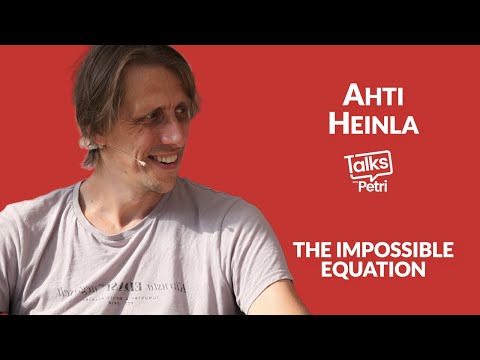
The impossible equation
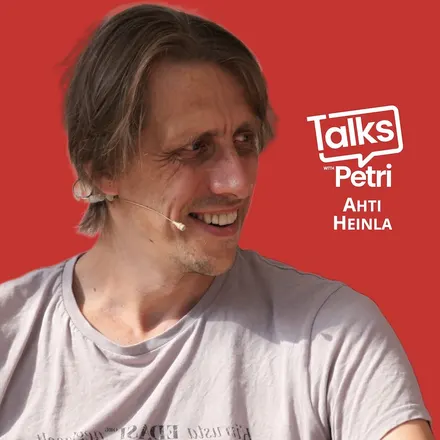
With Ahti Heinla
Ahti Heinla talks about building companies that impact a massive amount of people, how even successful founders struggle and fail at times but also what’s the right approach to build a business case. He also reveals how his company managed to pull off something that a tier-one VC told to be impossible.
Ahti Heinla - TALKS WITH PETRI
Ahti Heinla talks about building companies that impact a massive amount of people, how even successful founders struggle and fail at times but also what’s the right approach to build a business case. He also reveals how his company managed to pull off something that a tier-one VC told to be impossible.

The impossible equation
Ahti Heinla talks about building companies that impact a massive amount of people, how even successful founders struggle and fail at times but also what’s the right approach to build a business case. He also reveals how his company …
Bio
Ahti Heinla is the co-founder and CTO of Starship Technologies which is the world’s leading company creating local delivery robots. In 2002, he was part of the founding team of Skype and was the company’s Chief Technical Architect for the first five years. In 2008, Ahti helped to mobilise 3% of the population to clean Estonia's forests in a day.
LinkedIn | Startship | Bluemoon
 Play video
- 1:40 when your robotics competition drive kicks in Robotex
- 4:20 an expensive hobby becomes a serious venture
- 6:20 committing to your startup
- 9:20 Skype was one of the biggest European success stories
- 10:40 aiming higher than Skype that had 700m users around 2010
- 11:00 trying out a lot of startups that have failed
- the illusion of over-night successes
- 12:20 India, and almost moving there to build a startup
- the other side of the entrepreneurship
- 18:20 a working business vs. a story
- 19:00 last-mile delivery economics
- 19:20 VCs are paying for most of the deliveries now
- 20:00 unit economics and back-of-the-envelope calculations
- 20:40 universal technologist
- 22:20 will this work commercially?
- 23:00 last-mile food deliveries
- bootstrapped (self-funded)
- 28:00 why not drones?
- 29:40 millions of deliveries done already
- 32:20 R&D and commercial operations
- 35:00 predictability in engineering and business
- 35:40 Starship culture
- planning for the future but delivering now
- 39:20 team interdependencies and stress
- 40:00 company values
- 41:20 key metrics
- around the world daily by distance
- 43:00 driving without human supervision
- 44:20 a bleak moment
- 250x improvement needed to survive
- 45:20 weekly reports on improvement
- 48:00 4m deliveries is just a start
- 48:20 robotic deliveries will win
- 50:40 founders didn’t want to be the CEO
- 51:40 hired six CEOs but few have worked out
- 52:40 how to find a good fit CEO
- 58:20 resourcefulness
- 59:00 leadership qualities
- 1:01:00 career paths not always towards leadership positions
- 1:03:40 COO vs. CEO or a founder CEO
- 1:08:00 fundraising requires a performing company
- 1:08:40 a keyhole perspective
- 1:09:40 it matters how you tell your story in fundraising
- 1:10:00 the value of investor feedback
- 1:13:20 investor expectations with each investment round
- 1:20:00 coding with pen and paper
- 1:24:40 building the first computer game published outside of Estonia
- 1:25:00 Estonia after the Soviet collapse
- 1:27:40 complex needs boring to get somewhere
- 1:31:00 learning and experimentations are hidden from the public
- 1:32:40 ten years over-night success
- big companies react to revenue threats (exponential growth surprises them)
- 1:34:40 the founding of Skype
- 1:35:00 learning PHP over a weekend
- 1:36:00 Estonian startup scene
- 1:40:20 starting from technology is a terrible idea for a business case
- 1:42:20 1000x more expensive to call by using a regular call vs. Skype
- 1:44:40 Skype was organised around its internal chats
- 1:48:40 ten first Skype employees failed with their startups after Skype
- Web3
- 1:55:20 cleaning the world
Episode links
- Janus Friis
- Skype
- Robotex
- NASA’s centennial challenges
- Allan Martinson
- Wolt episode
- OnlinePizza episode
- Amazon Prime Air
- Continuous integration
- What a CEO does
- Peter principle
- Skype by Acquired podcast
- Mixergy podcast episode
- Dingo
- Hittimittari
- Jaan Tallinn
- Kosmonaut
- Disco Elysium
- Niklas Zennström
- Ambient Sound Investments
- Skype mafia
- Kazaa
- Peer-to-peer
- Bolt
- Martin Villig
- Wise
- Taavet Hinrikus
- Let’s Do It
- World Cleanup Day
- Estonian Fund of Nature
- Sun Microsystems
Episode picture credit.
Transcriptmachine transcription · 2:10:32
Transcribed from the recording by machine (Whisper): it may contain errors.
0:00 Welcome to Talks with Petri show. I'm your host, Petri, and today's guest is serial entrepreneur, Skype, and Starship Technologies, co-founder Ahti Heinla. Welcome! Hello, hello, everybody. and then hi Patley, thank you for having me here. Let's talk 1st about stars. How do you escalate a curiosity project into 8 years old startup with 2000000 raised funds? The answer is step by step, because that's why it didn't happen, happen all in, all in one go, but step by step, you can, you can grow anything. You can, you can, you can do anything really. Like if you, if you start from the just an idea, like the 8 years ago, this was just an idea, this was, you know, me and my co-founder, Yellow 3s, we were... Sorry to pause your email before that, because uh, just for the curiosity, but I actually learned, it started even earlier. You had a family life and you were busy and you needed some distraction or some curiosity.
1:03 Can you just quickly, you know, walk through the real start of the thing and, you know, then it became an expensive copy. Yeah, go back also to the time when I was born, but that was... We could go to LA. get to that later, but essentially, you know, I had been a fewer software person. You know, my my parents were computer programmers. My mother taught me how to prove your computers when I was 10 years old. I'd been, I was the chief tech of the character, that Skype, but Skype was pure, purely software, right? And then, then at some point, you know, like my, my, I became a father, my daughter was born, and uh, and then it was kind of difficult, you know, the, the 1st, you know, you know, year of, of, of the paid his life and so forth. And I, I thought, I thought I couldn't really do like a startup at the same time. But I thought I could have like a technical hobby. I could, I need to do something on the side.
1:52 I don't, I can't, you know, just, you know, stay home and, and, and, and, and be with, be with the baby, but probably, for me, crazy. I need to do something else so I could like, oh, I could build robots. So, so I started building robots, you know, for hobby and for competition and then turn, turn that into, into a business later. By the way, Estonia is quite big with robots. Is it the biggest event organiser or the event still because maybe that was what's got your attention at the time? Yes. So, so, yes, so Estonia has this, this robotics competition, a robotics festival, called Robotex, which is actually, which is the biggest robotic competition in the world, very, very, about 1000 teams competing with the robots in various competitions. Um, uh, and yes, like one of the, the 1st things that I really did with these, actually, best robotics was actually I went, went to compete uh, on, on, on robotics, uh, and I, I thought that, you know, typically in Romotech, it's like the student teams and, you know, like, you know, high school and so forth and so forth. I was like, you know, experienced technologies and so forth.
2:59 I thought, okay, I'm going to win this, you know, like, especially I looked, I looked at the last year competition video and I thought, okay, I mean, I could do better. I could do better than that. Then, then we, I assembled the team with some really experienced professional friends. And we, well, we didn't win. We, we, we, we hardly got past the qualification round. So it was, I learned also that robotics is hard. It's harder than you think. But I learned through this process. And, you know, next year we got actually 3rd place. So it was, it was a little bit better. Uh, and then I, then I went on to do to a NASA robotics competition, another centennial challenge, which is like a bigger thing, which is a little bit like this X price type of thing, a little bit smaller scale. It's only only one.
3:49 50000 price first, but still, you know, definitely you get a bigger, bigger event. Uh, and that was also a big learning experience, it was a, it was, um, we really, you know, tried to do this really professionally with about 10 people team. Uh, and uh, we were like, I funded the team uh, and I led the team myself. By that time, my daughter was also a little bit older, so I could spend more time time doing these sorts of things. We still didn't win. And we did that for 2 years. So at that point, then I kind of decided, okay, maybe actually let's turn this into a business. It's enough doing this for like 3 years as a hobby. Let's, let's, let's try to, try to turn the city of business. So, uh, if I understood correctly, you were flying back from the competition and you stopped by in London and and you, you, that's the specific thing, your friend, uh, Janos freed from Skype times and, uh, can you walk through the process? Because this is, uh, something, I think every founder is going through.
4:56 But 1st you have like a weak idea and it's like, okay, I don't know whether I should do this or not, then okay, this is starting to get a bit serious now. And then you realise that, you know, you know, there's a point where like, you know, you need to solify, you know, okay, let's do this and jump off the cliffs. So, can you walk through that process because, you know, it's, like you said, it's not obvious and when you have state, it tells whether, you know, you're never wanting to be an entrepreneur and here we are. Right. And, you know, and actually, it was more complicated than you, than you, you describe it, right? No, it wasn't that, you know, I was flying back from the from the NASA competition and then stopped by stopped by in London with the piano. It was more complicated. These were actually too parallel processes. So with the robotics. Initially, I didn't want to turn this into business. Initially, you know, actually, some of my, of my team in the competition was telling me that after, you know, your experience is out of, let's do, let's make this, this, this, this, this startup.
5:54 And I was telling, telling people like, no, no, no, no, no. Let's not do that because, you know, what we're doing here with the competition. pure fun. This is we're doing it just for fun. You know, if we lose or win in the competition, in the end, it doesn't matter really. If you turn this into a business, it's going to be a different story. It's going to be much harder. It's not going to be just for fun and we can't just quit any time. Uh, you know, it's a competition. It's like, okay, if you if you're preparing for the competition for 6 months and 3 months in, you decide you're not going to do that competition, actually, maybe like, you know, anything, anything, for any reason, you decide you're not going to do, going to do that. You can just decide. So, you can just decide, okay, we're going to withdrawal and that's it. No problem. With a company, you know, it's not like that, the 3 years in, you just decide, oh, yeah, it's, you know, it's too boring for me, you know, I just stop it, you know. You know, you can't do it like that, you know.
6:48 So it's essentially with the, calling a startup and rowing a startup, you immediate have commitment. Immediately, you commit to, you know, your co-founders, but that's the easy part because it's only a few small number of people, but you also commit to your employees, you commit to your investors, you commit to the public, to the, to your customers, and so forth, and you can't just, you know, quit, you know, if the, if you decide that, oh, you know, I'm going to do something else, essentially. So that's why I initially didn't want to do this. And I had actually power that process going on with Yanos, about, you know, doing a startup together. And we were experimenting with various ideas.
7:36 There was actually one idea which was completely, completely different, not with anything robotics at all, which was pure software which we were doing, but didn't work out. And then we said, okay, what are we going to do next? Then we had the brainstorm. We still had this sort of this overall setting that, you know, we were both at Skype. And we decided to work together. We decided to do another startup together. So we want to do something that was potentially bigger than Skype or something that could be really big. And the idea of robotics came up that, okay, maybe we should actually still do something with robotics. But then also the question was there's so many robots out there being built, but most of them do not really seem like, you know, big commercial opportunities. Most of them seem seem to be like, you know, for fun or academic or, you know, a little bit like that, not something that could be a really big business or bigger than Skype.
8:34 you know, Skype touches, touched, you know. Well, everybody's lives would be a little bit of an of an exaggeration, but still, it could touch on the lives of many, many, many people. But with Skype, you know, then, you know, loads of people, you know, later, you know, wrote to us that, you know, how their, whatever long distance marriage was saved by Skype, and, you know, about, you know, loads of stories, stories like that. How did you even say with robotics? Uh, toss the pause a bit to give the magnitude for those people who actually maybe never use Skype because they're just a bit younger generation, so it's in the same same category like the rotary phone. Um, so TikTok, uh, uh, in, I think the Western Ball is now like 700 million, 700 +000000 monthly active users. And and Skype, when the Microsoft Part, it was pretty much the same 700000000 users. So, you know, 10 years difference and smartphones were not exactly there yet in the level.
9:33 So that gives the magnitude of the team Skype was at the time. Right, right, right. Essentially, Skype was a long time ago. So a lot of people nowadays, you know, don't know what Skype really, really, really was. I think, you know, or what the magnitude was, but Skype was one of the biggest success stories out of Europe, essentially, in terms of the, in terms of, you know, consumer technology, you know, you know, startups, like it was, it was something that, that, that the crew very quickly grew, you know, very, very big. And it was kind of mostly, you know, found it developed in the Nordics, essentially. Uh, you know, Estonia, uh, uh, UK also and, you know, but it was mostly developed in Europe, but used all all around the world and was pretty big in Asia. Asia was sorry, actually the biggest Europe base. Uh, but developed in Europe.
10:24 And you don't get that, you know, too often, you know, most of these bird dominating startups and consumer products they are built in somewhere else, not Europe. But this was one of the original big success story out of Europe. But it was a long time ago. you know, many people don't remember that anymore. Yeah, the Skype has changed also over the years. We can go back to the sky a bit later, but going back that you were saying that you did Skype together with a few other founders. And now we're like, let's put the ball a little bit higher. So exactly. It's a natural thing to do, right? And if you if you have hand, you know, some great success, then the next time you're trying to do something, you are aiming for something that could potentially be bigger. You can never guarantee to be bigger.
11:13 Because, like, one thing, one thing also, you know, that you should know, you know, maybe, maybe about me and about startups that I have done, you know, maybe most people know only about Skype and Starship. But actually, I've started a number of other things. that nobody knows about. And nobody knows about because they never got past, you know, like hiring 5 people and then we decided, okay, it's not working out. Uh, uh, and at that scale, you can actually just decide that, okay, you know, the founders want to do something else and let's just, you know, shut this down. That's possible. When you have a 100 people, it becomes much, much, much harder to do that. So the, the, I, I, I, I, I, I, I, actually quite a lot of experience in these very early days where, you know, starting things where it's just a couple of people and do that for 6 months, one year, 2 years and then decide that, oh, it's not working out. I've actually had all of that.
12:16 Sounds like a few of the Finnish stories, such a story as well, like Angry Birds. I think the, was it the +50 game, you know, it's actually worked and that's everyone knows, but you know, those 501st ones were not exactly the hits. And then the same thing with Supercell, the other, uh, even a bigger success story in the gaming world where they're actually tasting a lot of these new ideas and teams are maybe building for a long time and then they just scrap it and it's like, okay, this is not good enough to our high quality standards. So, so, and it's it's not a failure. It's just like, hey, we tried it and it didn't work out. Right, absolutely. It's very much this story that you often, especially in the media, you have stories like, okay, okay, it's something was an overnight success, and it almost never actually was an overnight success. It was 10 years of hard work, experimentation, failures, some early successes, but nobody noticed, then failures again, then some a little bit bigger early successes, and then then you hit it big.
13:20 And you can't predict, you know, what, what, you know, you know, like I said, you know, I did, I did in between Skype and Starship, I started a number of other things. Can you give, do we have a rough estimate, you know, even, you know, in the ideas that how many, it doesn't need to be like you did it for 2 years, but you know, I think I, I think I started in terms of commercial, you know, startup, startup ideas that I started or who started was about 5 that nobody knows about. Um, uh, uh, Right. Yeah, oh, 55 about four. I think, you know, one of them actually became, became a little bit successful, but where I was like a little bit of an early co-founder, but I was like a very early co-founder and actually decided I'm not going to do that anymore. So, the, the, the...
14:10 Was it the talk at API? No, no, no, no. That was actually... That's the one you actually have in your LinkedIn. And you don't have many things in LinkedIn, so that's properly special in that sense. Right, right, right. Yeah, I enlisted all of these early experimentation projects, you know, in LinkedIn, but, but I was actually actually doing, I was actually an early co-founder in an, in an e-commerce startup in India. where I was actually going to move to India and do this full time and so forth. And then actually realised, you know, I actually, you know, going back to back to the story about, you know, becoming a father, and I was actually thinking that I could do a startup, uh, raise or have a kid, uh, and move to a different country all at the same time. Uh, and uh, I realised very quickly, I can only do one of these things at the time. So that was raising the kid.
15:07 And for the audience, Oscar, Arthur has a great website, still, I've got Ploma, and I can put it into so notes, and you can see his travels as well then. I guess it was. Did you find the founders and the idea while we were travelling in India or was somebody contacting you or how do you come up with this? was a colleague at Skype, who was from India and wanted to move back and and and do this. But definitely it helped that actually I had travelled to India. I actually been to India 10 times. So, so, so to travel quite a lot in this part of the world. It kind of kind of kind of helped to actually, you know, set the seed or understand a little bit, you know, that what this country is about. And it's very different from around here. Um, so basically, if you go back a little bit to the to the Starship, um, so, okay, now the team is like, uh, after you need to do something, you know, we need to make this a serious piece of snow and, and, you know, not, let's not have fun anymore.
16:08 Let's have a, you know, some commercial success, Santa, and all the pets are off in a sense that now we have to do it, then jump off the cliff. What happens then? And, you know, how do you, how do you do a hardware startup which is, you know, hardware is hard. And, you know, I guess you can agree and everyone who has actually done any hardware stuff is really hard. So what are the metrics? How do you build a successful hardware company from the start? Yeah, it's it's difficult for sure. Yes, hardware is hard. Robotics is hard for sure. But I would also say actually building any startup is hard. Uh, you know, you know, software or hardware. People focus on the successes, but typically internally, it's a fight every day. And the, and lots of, successful startups, really successful startups, and had tough spots and had really tough times.
17:04 So, so the founders all, you know, kind of on the stage, you know, smile and everybody looks at them and say, oh, these guys, it's so easy for them or they enjoy this great level of success. Yes, that is, you know, sometimes people have just a lot of luck, yes. But you also have a lot of bad luck and you also have a lot of challenges that you're going going going through that you don't talk about on the stage. So, so that is absolutely clear and all of the, all of the uh, very successful startup founders also that, that I know, they have gone through some rough times. Regardless of whether whether it is hardware or software or anything else. But hardware, definitely, you know, 11 thing actually, you know, since we had to success subscribe behind us and we were both high network individuals, we, one kind of kind of decision, we did, did, did that start, is that we are going to initially be going to fund it ourselves, you know. Now we have raised, you know, 100s of millions, you know, also from outside.
18:08 But initially, we only started this because we knew we could fund this initially ourselves. Because I understood this is going to be a long-term game. This is going to be something that needs investing in before it really starts, starts to work. And, uh, specifically, I think things are actually easier done if you are, um, if you have a little bit of a, of a, of a background of how to spin things in the public or how to, you know, create like a little bit of a sure story out of this, but, you know, I'm not really like that, you know, I'm, I'm actually like, okay. What is actual business essence? Why are we doing this? and let's make this work. I never wanted to create like just a story. I create I wanted to create a working business.
18:59 And work business, robotics requires scale, and requires things like, okay, why are people using our service? So, so, you, if, you know, people are not using a robot just because it's a gimmick or it's a nice thing or it's just, you want it to, want it to actually this, this deliver robot to provide utility. And one of the pieces of utility is actually that it would lower the cost of delivery. And we figured out, you know, that delivery is a big problem economically. Generally people are not willing to pay for delivery. Uh, if you, if you, if you get your, your, your next, you know, you know, food order and uh, and uh, and you, and you see that you, okay, yeah, I had delivery fee, you know, 150 and I got the 50% discount. So I was paying, you know, less than a euro, you know, for the delivery, like if you, if you do the math, you realise that somebody must be paying the difference, you know, the delivery really lost my delivery cost way more than euro 50, way more.
20:04 And that's the problem. Customers are not willing to pay for what it actually takes. right now or until recently. Vature capitalists, they're willing to pay for it. So venture capital is very, but, but pay for delivery, and they're not going to do that forever. So that's the problem we wanted to solve. We wanted to make delivery lower cost. So when you asked, okay, we had this brainstorm in London. So what did we do next? My next thing I did was create the back of the napkin calculation, and the back of the napkin calculation was about duty technomics. It was about how low can we go in terms of the costs? How much can robots, robots lower the cost? Since this backup, the calculation worked out. That was a big milestone for me. That was that, okay, maybe we can, you know, really do this. So let me pause here because I think this is really important lesson.
20:53 So you actually didn't start from the technology, having all the background of already going to the competition. It was more like, okay, how much are the consumers willing to pay for this thing? Can we actually make it to work? Does it actually have like some kind of a substance in a way that, yeah, probably it doesn't work now, but we can actually engineer it out and at the end it will work out. Right. My thought process essentially was, you know, I'm sort of a fairly universal technology thing that, you know, by that time, I had a background for both, from both, you know, hardware and and software, and I could, I could just, you know, In a very sort of, um, shooting from the hip way, approximately, you know, assess how long does it take to develop this thing, how much the robot would cost to manufacture. Uh, some of the other, you know, you know, parameters around that, I could, I could just, uh, just, you know, shooting from the hip in a very sort of approximate way, I could, I could assess, you know, how, how, how, how would that work?
21:56 So I knew that approximately, that's how it's going to be, because in the NASA competition, we were actually building robots, which, you know, they were actually what was not designed to do delivery, but designed to pick up rocks on Mars. But if you think of it, actually, a robot picking up rocks on the Mars. is actually the relatively similar size of a side of delivery robots. And relatively similar speed. And with you, actually, some of the relatively similar sensors. So some of the technical background I actually had, I knew almost exactly how much it would, you know, cost, how much what sensors we would need to use and so forth. What I didn't know was that, you know, does that, would that actually work as a business? Um, because there's no point in starting to just go deep into technology, starting to really build this beyond just shooting from the hip, but starting to really build this. If you actually have this big unknown, which is, will this work commercially?
22:55 So we needed to validate that. So, we actually, actually, you know, you know, you know, uh, had a friend of mine who is actually really good at that. Alan Martinson, who was actually helping us, uh, to validate this, this, validate the commercials, essentially, the output of that was actually that, oh, it's actually a really good idea commercially to do this. And just to also remind the audience as well that, you know, you started 2014, you know, obviously a bit earlier, but that's the time. So vault and bolt and all these food deliveries were just about to get started or they went in really early years. So it wasn't like a proven model it is now. And the world really looked different at the time. So it wasn't clear that, you know, it becomes like a major trend and I get it really the COVID times, we sort of hit it home that, you know, it's so convenient and it works. And so you started like really in the different era, I would say.
23:54 Well, yes and no. Yes, definitely, definitely, these, you know, food delivery startups that exist today, they vary in very early stages. That's true. On the other hand, people had things delivered all the time. I mean, you know, FedEx, UPS, these things existed for sure, you could also get pizza delivered all the time. That's an industry that has existed for a very long time. So it wasn't that, that, that, that, that there was that we didn't, we didn't uh, know whether delivery as such is something that people want. We knew that. That, that, that's what's for sure. And we knew also from the start that the robot that we are going to be building, it could try for packages. It could transport pizzas, it could transport flowers, it could transport, you know, medicine, it could transport anything else. Then, and we actually segmented the market and, you know, when, and try to put some numbers on it, like, okay, what, what are we going to deliver? And we quickly find out, for example, flour delivery is actually a very small business.
24:54 Pizza delivery is way bigger business, for example. and so forth and so forth, you know, and this, we understood. But that all came a little bit, a little bit later. We understood that our robots would be agnostic in terms of the technology would be agnostic in terms of what it would actually deliver. Regardless of the food delivery startups, we would have some business. Is it a secret? How much you actually put your own money before you didn't see Brown, uh, which was like 17000000 or something that was the official round for the, for the other people joining the project. So you did actually the whole testing phase and the 1st phase just by the founder. So how serious you were in this sense. Yeah, so initially, on the sort of the 1st meetings, we kind of decided that, okay, we're going to be putting in 2 million. Obviously, in the end, it, you know, we raised much more money and so forth and so far.
25:47 So, so 2000000 maybe was, you know, way too small for, for, for starters, but you know, if you, if you are just 2 people, then, you know, you don't have that many, many expenses initially. So there's 2 million. Actually, lasted us for like, I think longer than a year. So it was especially required step and I can't overemphasise this, that if it didn't have this sort of 2000000 to invest into it ourselves, we would likely not have done it. We would not, we would likely not even bother to go to, to be seized, to raise money for this because we didn't know what to pitch even. We didn't. You know, like the, the, these were so early days that we, we thought that there's something in there. There's something in there.
26:35 And and the, and 11 other thing, maybe a little bit of an insight, you know, that, that, that many people do not realise, you know, you know, back then, of course, you know, delivery was done, you know, usually with cars, right? Uh, and, and the, the, the, the idea of having a much, much smaller robot to do delivery was a little bit maybe of uh, of a new thing. But we realised also that, you know, things are delivered with the car because the cars need to fit people. It's not that the car needs to fit the package that you are, you need to deliver the package is small. Usually it's very, very small, right? And you can actually build a very small robot that goes even really fast. It can go actually car speed. Although, it's not designed to, to, to, to do car speed.
27:24 But for example, Do you know what is the speed record for like the small model RC cars or actually not even RC, but competition cars, which are like this size or something like that? What's the speed record? Like the actual competitions, you know, for that. Uh, are they electric or are they, it doesn't matter. No, I think at least at that time, I'm sure nowadays probably these competitions are done, done electric, but now, but back then it was actually combustion, either a combustion engine. Um, Well, I had adults, when I was a child and they went like 50 kilometres per hour for a, I think some of them. So it must be like a double or triple of that. Yeah, so they, so at the time, we started Starship, the world champion was an Estonian, and the world record was about 330 kilometres per hour. So it's like flying basically.
28:17 Exactly. And this is like this size, like really small, small thing, right? And so you could actually build a robot, which is very, very small, and goes on the road with the same speed as the cars and continental packages. But probably it will be crushed by the by the cars. That's the problem. Then we decided, okay, but if we can do this on the sidewalk with much smaller, much smaller. Did you ever consider actually drones like you could fly because that's somewhat easier in some sense and harder? the other? So actually, drones were considered by other people? at the time? you know, Amazon has just publishized their their idea of of of doing doing from them, but one of the sort of counterpoint. actually started Starship as a little bit of a culture point so that we realised that, okay, you know, drones actually have problems. You know, people don't like roads, you know, the one, you know, famous saying is that is that people would love to get wrong delivery, but they would hate it when the neighbour does.
29:13 So, and if you live in the reservation neighbourhood, you have lots of neighbours. If people will, but all the time getting wrong delivery, there would be just this sort of buzzing and this, people don't like flying things up in the air with our picture passing. Um, all right, so, Anything you want to share with the journey? I don't think we will go all the details on what happened. There's an excellent website you have and there's a lot of milestones and actually one peculiar thing, I was just looking at, is it now 4000000 deliveries this year? Was the latest? Yeah. Yeah, we just exceeded 4000000 deliveries with our robots and 8000000 kilometres driven. So we're riding as much kilometres as the self-driving car companies are doing, but with a much slower robot, right? And our, our mileage, archaeographers, our our commercial, uh, commercial volume, it's not like testing, like the, like most of the self-try kilometres are, are, are done.
30:16 So we are essentially a bird leader in autonomous technology now. And that wasn't where we started in 2014, but we built this into the world leader in autonomous driving, essentially. And we have programmed that the robot delivery does work. Oh, it is 4000000 deliveries, you know, our sites are much higher than that, right? But 4000000 also proves that, you know, this is not just a gimmick. This is not something that, that, this is just one robot driving around or something like that. We have 1000s of robots doing deliveries every day. I was actually, because you mentioned these milestones and I was like, okay, is there like exponential curb going, like going backwards, like November, you know, this month, November 2020, 4000000 hit, February, this year, 3000000 uh, then October 21, 2 million. So that was basically doubling.
31:10 But then the previous doubling from, was last year from October 21 to January 21. That was one million. So it's like, are we, are we starting to hit, uh, he hit like, uh, really like, you know, going up in, in a sense and where do you see this going in 5 years old? Yes, it is exploration for sure. I think, you know, for the 1st 4 years. For the 1st 4 years of the life of Starship, I think we did maybe about 20,000 deliveries or so. No, yeah, it's 4 million. It's definitely, definitely like sell everything and, you know, makes, it makes no sense, you know, why it's accelerating. Of course, you know, in the early days, we were just building, we were just building robotics technology. That was all what Starship was about, making sure that the robots could drive autonomously on the sidewalk and whether it's safe enough to do so and everything around it. Um, And then it was more about expanding the commercials, the also the manufacturing of the robots, you know, the all of the commercial partnerships, you know, what do the stores need from us, you know, how that, how that, does the delivery work from the uh, consumer perspective and so forth and so forth.
32:19 And then when you start scaling this up, then we are accelerating for sure. How do you balance the R and D side of things, which always needs to be improved and, you know, you could always do more, but you have to also deliver and then the commercial side because you mentioned that you are commercially successful and you were pretty early also in that sense. So how do you, how do you make that to happen because it's not obvious. Right. So, I think in some companies, there is a sort of a bigger separation between the R and D and everyday commercial operation. In our case, it's not like that. Uh, in, in, in our case, actually, the company and uh, and uh, and engineering is very much integrated into the, into the, the, the operations. These are 2 not, of course, there are 2 different departments of the company.
33:15 Yes, that is true. But the overall companies, not that, you know, the R&B lives in its own world and then the commercial operations live in its own work. We do, you know, continuous integration all the time. Like the, the, for example, the robot software, we are releasing, I think about 3 times a week. Uh, and the, and the, the, if, uh, for example, Antonio was writing software engineer writes a line of code and commits this, then it gets to the line robots to all of our robots in about 7 days or 10 days. There's like a testing cadence and and so forth in between and automatic tests and so forth. But it's about 7 or 10 days generally. And when they mess up, when they make a mistake, you know, them, they're messing up the commercial operation, right?
34:09 So that's why the feedback loop there is also very tight and everybody reviews the commercial results all the time. It's not that the R&D engineers do not care about, you know, how our business are doing. No, no, no, they care about it very much. And also we have a big weekly engineering meeting, which is very much sort of R&D oriented, which also, you know, our, you know, operations leaders attend and so forth, and they listen to the engineers answer about, you know, how some screw got loose or, you know, how they had some bug or how they had, you know, you know, something else. They're actually very, the R and D and the commercial operation is actually very integrated. And that's a good thing, obviously, because it gets everybody aligned. It's also a hard thing to do because it takes a lot of stress.
35:00 It creates a lot of stress, essentially, because R&D is a little bit unpredictable. The commercial operation needs, obviously, applicability and stability and reliability from technology. On the other hand, it also works the other way around in that business development, that business partnerships are also unpredictable. You can't predict that when are you going to get the signature from a partner or when you're going to launch this other thing, uh, and uh, even though sometimes, you know, a commercial people are saying that, oh, we're going to launch this, you know, next week, and then the engineers are kind of developing for that a little bit, and then it turns out that, oh, it actually gets launched in 3 days earlier. And then R and the engineers are not ready and everybody's piston, you know, they so it creates a lot of spreads.
35:50 This integration creates a lot of strength in the company. But we have still chosen to go this full integration way and not have this vertical silos all that much. How do you? What type of culture are you building in the company? Because there's already 100s of people already in the company. It was not just you and a few other founders doing everything. So what's the process for there? Because it's completely different to have a company with maybe 10 people, 10s of people, then 100s of people, and still have the initiatives and the drive and those things which actually makes it successful. So how do you make sure that that will happen as well in the future? Right. Yeah, and actually this integration that I mentioned earlier, that is actually, I would say, very much, you know, part of the culture. Very much, you know, part of the culture, uh, that people take ownership of the end results.
36:45 And they do not, not just you to think that, oh, my team's work is done. Or my team did a good work, good job on this project. No, what's important for everybody is that the whole project was a success. Not that your team did a good job on this on this project. And that is the culture culture in the company. And also, also when I, when I said that, you know, it starts with one of the leading autonomous priming companies in the world. That is actually the sort of integration is also in robotics development. sometimes also an issue between the software teams and the hardware teams. They work on different timelines. The hardware teams move at the slower timeline, obviously because of manufacturing schedules, and doctor moves faster. But on the other hand, the software people typically, you know, sort of driving, the software people require a certain hardware.
37:41 They require certain hardware improvements in order to deliver on whatever reliability, quality, autonomy levels, whatever efficiency metrics that they need to deliver on. Uh, and in a lot of autonomous driving companies, these are actually somewhat separate in the sense that actually, the autonomous running software, developers, uh, or software researchers, they essentially say that, hey, we require, you know, a liner with this sort of spec, or we require cameras with this sort of spec. And they don't exist. right now, or they're not mounted on the robot. So there's like a timeline. Oh, next year we are going to get this. All right. And then then people start developing this, uh, the software in simulation. Or these sensors that have not yet arrived. And then invariably these sensors get delayed.
38:36 Uh, they don't appear in the next, whatever, by the way, yeah. And then everything that's up, essentially. then all the timelines get to get messed up and so forth. We haven't actually done it this way. We have, we have also gone like full integration between these teams in the, in the way, in the way that nobody can just, you know, say that, hey, you know, I am just relying on some other team delivering on this, you know, one year from now. No, everybody's developing with what they hand today, and their job is to deliver a good result in commercial operations, one week from now, or one month from now, if you are a software team. If you're a Harvard team, yeah, it's a longer, longer, longer timeline, then you may be expected to deliver, you know, 3 months or something like that in commercial operations or maybe 6 months, depending on the on the thing. But still, you can you can never just say that, you know, hey, my my team's job is done.
39:30 I wrote the software for this non-existent centre, my job is done, you know, I should get the bonus or something like that. No, you get the bonus, but it's actually working on commercial operations, including having the sensor. I think that culture has actually helped. making starship leader in the autonomous driving space because that's actually what gets you the quickest practical results. But it does get does build in a lot of stress in the company as well. A lot of tension. People are not happy about them, their team, the results, you know, did not end up good. Not because of my team, but because of some other team. So people are suffering, because of that, but also the built-in star cheaper culture where, where I think the, a lot of the people in the company, they, they, they have this sort of right mindset that, that they don't point singers, they don't do this thing, and we have this one of their company values, is, we work as one team. And that is a mantra that is repeated throughout the company.
40:39 What other matrix you're following in a sense that you know that the company's going in the right direction because in the startup, well, there's a lot of vanity matrix, but you know, there's some things which are really a sense, so, and obviously the further you go with the company, you get a sort of sense what actually makes sense and how you can see that everything is going the right direction. and because usually you get what you mess up, you know, the... Number of deliveries. Revenue. Uh, profitability. Uh, and then in the, in the engineering sense, also some of the ingredients of all of these things that how many things get, did, went wrong. Yesterday. So, you know, with right, you know, 10, 20,000 kilometres every day. Right?
41:27 Uh, in the, and to put that that in into perspective during the 1st year of our operation, we drove 1000 kilometres to the 1st year, right? Now we're doing, you know, 10, 20 K a day. So definitely the mishaps happen. Things happen, you know, wrong every day, during 10,000, 10,000 kilometres. There were a number of things, they were suboptimal. These get reviewed, and how many, how serious have these things happened? you know, yesterday or the last week or whatever it is. And these are the metrics that you're following all the time and there's loads of efficiency metrics in technology because if you say that, okay, we are writing down the cost of delivery. This cost is largely technological for us. If you're operating a human delivery network, this cost is, it's mainly the, the, the, what you pay to the, to the courier.
42:19 Uh, and that's like, I mean, you cannot optimise that to react smaller next year or something like that. It's kind of, not completely fixed, but it's, but it's, but it's near fixed, essentially. In our case, because, even though we do have people in our operation, but technology determines how often our people need it. How often robots need maintenance, for example, and so forth. So we can optimise the maintenance costs on the road, but down might react if we want to, right? So there's loads of technology metrics like that, about reliability and various things like that. that determine our cost. So these are the main metrics that the R&B team is using. And they have actually various phases in the life of the company. These metrics have changed over time. When we started out and when we were during the 1st 4 years, approximately, then we were focussed on mostly building the robotics technology.
43:15 And one of the one of the key milestones there was in 2017 where we became the 1st company in the world to drive to regularly drive robots in public spaces without any human supervision. Because, you know, such driving cars. you know, way mob was also driving their cars before in public spaces, right? But always with a safety driver in the car. And we also had earlier, we had before 2017, we also had people following robots. Yeah, I remember even Italian, you could see that was like a regular thing, that there was a person following and has some kind of a controller as well. Exactly. And we did a lot of gelometers like that. Obviously, this is not efficient in any sort of, you know, commercial operation at all, right? Obviously, we knew that we needed to, we needed to develop the most to the point where it's safe enough to drive without any humourous supervision. Then we went to remote supervision, right?
44:10 But also when we knew we needed to get rid of that as well. And in order to get there. It's not by the way, the level 4 and level 5 is fully all the numbers if you're not taking the jargon from the cars as well. Right, right. But in order to get there, in order to drive without this human supervision. We also had method. We had a metric, how often, you know, certain types of abnormalities, you know, happen that would then maybe require, you know, some human assistance. And that when we 1st started to measure the metric. Uh, there it was that, 0 gosh, we have a long way to go. We have a long way to go. Like this was actually one of the sort of the relatively bleak moments.
44:59 I would say that the metric was bad. And that was, I think, 2015 or so. Pretty early in that. Yeah. And we, we thought that, okay. But to what level do we need to drive this metric? And we figured, okay, we need to... We need to improve or change the metric 250 times. 250 times. We need to improve before we can remove people you know, following robots. So, like, one, you know, venture capitalist, approximately at that time, you know, told me, told me in a tier one firm that, you know, you can improve a metric 10 X, but you can't plan to improve a metric 100 X, like 10 X you could do, but 100 X you cannot plan for, you know. I'm not going to be funding this, essentially.
45:49 The, the, what we did was that I was the CEO of the company. We had a weekly meeting every Thursday, we still have the weekly meeting every Thursday, and I stood in front of the company every Thursday, and I reported on that metric. What was, what has, has the metric been now. And uh, we obviously had, this was the major focus in the company to improve that metric and it took 2.5 years. 2.5 years of me reporting it every week. Sometimes it went better. Sometimes it also went worse. This was measured in real life, not in some sort of simulation. And we drove it down 250 times into 2.5 years. So that was then the point where we could remove the the people from, you know, following robots. And they actually kept the same target.
46:41 They actually didn't change the target. If I, if I'm honest, the target was kind of set, you know, really like, oh, okay, what would it be approximated like that? We had actually no idea how much irregularities could we could we tolerate? But then we settled on a certain sort of level. And it was actually approximately the right level. So that was a major phase in developing the company these 2.5 years, where it was all about this one number. At that time, we didn't have commercial operations yet. So it wasn't about, you know, profitability. It wasn't about how much revenue we were making. It was about this one number. This one number still exists. We're still measuring it right now. But it's good enough. So it's, we are, it does receive, you know, some focus from R&B teams to improve that number further, but it's not a major focus anymore.
47:39 Are you planning to have some other crazy numbers now like that's, um, you know, bigger than Skype. How do you define, you know, that you are actually in the leading. Is it like uh, 2000000000 people are using it daily or is there some crazy vision, you know, where, you know, you said, okay, this is probably now in the level that, you know, I can somewhat, you know, be happy what we be doing. Yeah, yeah, yeah, you can, you can always on condition levels, of course, you know, and, and, and it's always something that you can, you can, you can improve on. So if you, if you look at right now, that, you know, Starship right now, and some people say that, oh, Starship is so successful startup, you know, Starship has made it. Yeah, in a way, such as made it, but on the other hand, also, the 4000000 deliveries that we have done, it's a very small part of all total deliveries that are done in the world. We have a long way to go in order to actually dominate the world.
48:35 But the thing about this also is, you know, robotic deliveries, will win, for sure. Like if you think of it just, you know, 1st principles. You can make robotic deliveries, lower cost, than human. Delivery has this economic problem that we talked about earlier that consumers are not really willing to pay the real cost of the delivery. Robotics is the only solution there. And we are going to win, and this 4000000 is going to sound very, very, very, very small one year from now or 2 years from now. Can you give some idea, um, if it's company confidential, obviously not, but, you know, something like 5 to 10 years, where are we? You know, what's the regular world?
49:25 How many deliveries, you know, numbers, how will change in that sense? It can be also some other other companies also that if you describe the world. There will be more deliveries for sure in 5 or 10 years. I mean, it's just obvious. The only thing that is limiting this is really is essentially economics and the availability of couriers. Because there is a bit of an, you know, economic, you know, game there that, you know, if you would pay couriers more, you could have more couriers. So you could do more deliveries, but people don't want to pay more to couriers. They want to pay less to couriers, to make the economics work so that, so that the consumers could pay for delivery, not the venture capitalist. Um, because veg capitalists are not willing to do that, uh, too much anymore, uh, or, or, or, or they're not willing to do that forever. But on the other hand, like the equation doesn't work, essentially.
50:25 So, but I think there will be more deliveries for sure, even with people, there will be more deliveries in it's 55 or 10 years than they are right now, but there will be also a big number of deliveries in 5 or 10 years that will be done with robots. Much, much more than 4 million. Such if it is a leading company in that stage. That space, you know, by a long shot. Like, if you, if you think, you know, what our closest competitors are, you know, how many there is they have done. It's it's it's maybe, you know, 10s of 1000s or or so, it's not in the 1000000s. In the history of the company, you have been to CEO and you have stepped down and initially neither of the founders wanted to pay a CEO. So can you, can you provide a bit about that? As a founder, you want to build a company and they certainly don't want to pay the CEO running things because that's a different shop.
51:16 So, uh, what is your advice and what body have learned, you know, of doing this, hiring also seals, what it takes time? The advice in general is don't do it the way I did it. Okay. Generally, because yeah, it starts most founded in a way where neither of the founders wanted to be the CEO, and I was the CEO, only because essentially we thought that, okay, in the beginning, we need to do mainly technology development, and then maybe the CEO is almost the same thing as the CEO. Of course, I was wrong. We started to do way more than just technology development, also quite earlier because we need to validate the market and get commercial partnerships and so forth and so forth. So essentially, we realise that, okay, in this situation, eventually we will need to hire a CEO.
52:11 The problem is hiring the CEO is actually really hard. I've hired as a founder or as a board member, I've hired 6 CEOs in my life. Very few of them workouts. So it's, it's, it's, it's, uh, It is tough. It is tough, you know, that there are some successes. But they're also failures, essentially. And the, and for various reasons, you know, it could be dynamic within the, between the founders and the CEOs, it could be that the CEO has, you know, a wrong or different motivation. Because on one hand, it's just easy to say that, hey, you know, yeah, I'll, you know, go and lead this company and, you know, spend other people's money and and and and so forth without, without really being the, being the founder and really, really, really responsible for, for, for, for the whole thing. So some people have this, this sort of attitude and could be, could be, could be, could be CEOs and maybe this, this, then, then, then doesn't work out.
53:16 But then there are also people with good attitude and that are good hire CEOs. But they're rare. And the process of getting that is just rare. Like if you look at, you know, one thing, thing that I did, I did also, also earlier on that, that, that, that time approximate is, I looked at, you know, in Europe, for example, what I, I, I got a list of all of the funding rounds that startups have done, which, you know, all of the startups that have raised more than like 50000000 for a show. And and I had, you know, had essentially a name, beside all of all of these rounds, that who was the CEO at the time. And they went through these, the names of the CEOs and the companies and there's like 90% of them, then their founders, CEOs. 90%.
54:06 That a little bit, you know, tells you what's the success rate of of hiring a great CEO as a non-founder. Uh, it's, it's really hard. But we have the situation that we have. Like, it was a fact that we wanted to found this company. It was a fact that we saw that we could pull this off. And neither of these of us was really like, you know, like a full CEO bacteria. So I actually, for most of the history of Starship, I have been the CEO in terms of the years. But it's not actually, I would say, it's not my foreplay, it's not actually something that I want to do or I'm the best in doing. What is the top of a CEO? Mm-hmm. The job.
54:56 not a request. It's just like that. How do you define that Fred Wilson has a really good one, but maybe I can tell it later on, but just curious, you know. This is like defining what is love. Everybody has their different definition. It's hard hard to be fine. I think, you know, one sort of like a very sort of clinical, clinical way to define it. The define it is that the CEO is the bridge between the outside of the company and the inside of the company. It needs to explain to the company what's going to going on outside and how they need to adapt and do something differently and what they need to do in order to deliver something on the outside and they need to explain the outside, like the media, the customers, investors, you know, what the company is doing and why this is such a, such a great, great company. But I think this is actually a very clinical definition.
55:45 This is not, it's it's true. This definition is true. But I'm not sure whether that definition is useful or is helping any, really. I would say the CEO is just, It's very hard work, uh, very hard, hard job, uh, being the number one uh, person or being the, the, the only person that everybody looks up to and and that, that could stand up to very high standards, and that has nobody to talk to. The founders are founders and CEOs are in that sense, you know. Kind of, you know, in similar, similar position. Do you go for qualities of the people because uh, what I've noticed that entrepreneurs, um, There's no good way to say this, but you know, maybe they care more. It's usually, you know, they are passionate about the vision and they want to make it to happen.
56:40 So if you hire somebody outside and they haven't been from the beginning, it's hard to get the same type of commitment and level and also the understanding of the issue. So it's even some, some way, uh, it's not even fair to compare that, you know, you have an excellent technical capabilities, an experience, and you take a CEO who doesn't have the background and hasn't control the journey. So they cannot even do it in that level. But in some sense, it gives you the advantage, which makes you also an excellency of in some sense, because you have that inherent. So. Right, right, right. I agree, I agree. But I think, you know, you know, who was CEO with also good hired CEOs definitely do take this ownership. They do, you know, get bought into this, essentially, they do, you know, get emotionally involved. Um, and and and over time.
57:35 Like they could do get passionate about it, even though they were not there in the beginning. I think it's not a problem with root hire CEO. The problem is finding the good hire CEO. It's not. I not saying the higher CEO can never work. No, it does work for Starship. Yeah, it does. It's just hard to get to that situation. It takes a long time of searching and a long time of betting people and so forth. How do you hire when you are in the early states and the company is growing and you're looking for, okay, maybe we double in the size of the company, some metrics and, you know, even higher growth, then you have to now get the external person to, to, to, to leave the thing. And what's the level of, you know, because the compensation comes in if you don't have too much money in the early stages as well. So how do you match that sort of impossible formula that what is a good fit now because it's maybe, you know, in 3 years, 5 years it's completely different.
58:33 Yeah, well, I think I think doing a startup is about matching the impossible things. Not just the CEO, but, but, but, but, but, everything else else as well. Your customer, customers want the product that doesn't exist yet. And, and, you know, there's loads of impossible things you have to match. And, you know, creativity and not actually creativity, but resourcefulness in solving these things is, I think, the most important attribute of a founder, resourcefulness. There's loads of things that are seemingly possible, but you kind of find a way how to how to make it work. You mentioned somewhere that I was doing the research or reading that, well, you didn't want to pay like lead up with you, you just found out that you're really good with this thing and people are like almost like nominating you as a inherit leader.
59:35 So what are the qualities? What does it take to become a good leader? Can you learn? Right. So I still don't think I'm very, I'm very good at this, actually. The, and, and, and I think I would... That's probably a sign that you actually are. Not stating it in that sense because... Maybe. And certainly, but I certainly also wouldn't say that, you know, I started doing this and found that I'm really good at this. Definitely not. You know, I started doing this and found that I'm really bad at it. And then I found that I'm even worse. And then over time, a little bit people started telling me that, hey, there's actually some things around this that you seem to be doing actually quite well. Um, and so that's a good. That, that, that's a good thing.
1:00:25 But but for me, definitely, I think I'm better as an engineer. Then a leader. But you're leading quite a big engineering team as well. and as guy was also a technical company. So isn't that basically it's the leading role in the company in a sense. You know, you're building an architecture, you're building the... It is, and part of the reason, actually, that, that, that, that, that engineers follow me, like if I'm the leader, somebody's following me. The part of the reason engineers are following me is that because they know and see that I'm a good engineer. Uh, so even though I'm not, I'm worse as a leader, they still follow me. Do you remember the step when, well, I think it's called Peter, Peter, Peter principle that you always, almost like, you know, a level of a maximum level of incompetence.
1:01:20 So, you know, if you're a good engineer and then, you know, people in the company want to say, hey, you should actually now, you know, become the team leader, you know, go higher in the ranking and then you're not actually probably in your best position. So do you remember? Right. I have the experience of, I have this experience of having been the CEO and then kind of stepping down to become the CEO and leading a smaller part of the organisation. So, you know, I was leading, I was leading 100s of people and it's the CEO, and now I'm leading just a 100 people. In the engineering organisation, in Starship. So, so I think I've actually seen this, this, this, this, this principle, you know, firsthand also, also, and I think I've done the right thing of actually actually coming, coming, coming down. But also I would say, you know, in Starship, at least, you know, I don't encourage, people don't encourage in Starship. Uh, you know, engineers to automatically become team lead.
1:02:15 I would say, some engineers want it, but it's because they want it, not because somebody, somebody tells them to do it. It isn't, it isn't the right thing to do for a lot of people. This is the right thing to do for some. And some people really have a good. Good talent for it, essentially. But there also some, also some people that I think, you know, have this idea that, you know, I need to, okay, I've been in this job for, you know, X number of years, you know, I need to become, I need to progress. I need to become a team leader. That is not so automatic. doesn't need to be like that. You know, in Starship, as in many other companies, we also have this, uh, this uh, individual contributor, career path or career ladder where you could be a junior engineer, mid-level engineer, senior engineer, principal engineer. So you could progress like that also.
1:03:07 You can't, you know, and we have only a couple of principal engineers in, in, in, in, in Starship. So you have a bunch of stuff to aspire to also without becoming a team lead. So basically you can also get your compensational level going up without going to the management ladder because sometimes it's like that you follow the money. Right, it's a natural thing in life and if you just cannot do it in your in your engineering path, then what do you do? Change company. Right, right. Yeah. And yeah, and like principal engineers, you know, in Starship, you know, make as much as the, in terms of money, compensation, as much as the, as the best, as the best team leads, essentially. So, so it's certainly, and also I would say, you know, a principal engineer is worth it to the company as much as a really good teammate. A principal engineer is worth more than another estimate.
1:04:05 You mentioned also that, um, yeah, you will step down a bit, you know, from the, from with the CEO and, uh, but then you also hired a CEO and, and you were the CEO. So how do you actually sort of constrain yourself of being the founder and the CEO? Now there's, you know, new person coming in and it's, you know, for both parties. It's, it's sort of, there's attention and it's sort of natural tension coming from different positions. Right, right, right. And that was in Starship. That was, I would say, I would characterise, I would categorise this as one attempt or not attempt, but one, one way, how we in one phase of the company, you know, solved this sort of, let's say, like impossible equation of 2 founders, trying to run a company with neither of them really wanted to be the CEOs, was that, you know, I was the CEO, but I had a really experienced CEOO, uh, in the company, uh, Alan Martinson, whom I actually actually mentioned, mentioned already, already, already earlier.
1:05:06 And, and in the, and it's funny. His career up until that point was that he has been an entrepreneur and CEO all the time. Like, I don't, I, I don't think he has done pretty much any other, you know, jobs or rows. Okay, he had been a VC as well, but all of this sort of, let's say, the roads and companies and being the CEO roads. You've never done anything else, I think. And I, for the 1st time, CEO. So all of my roles in the company was anything but the CEO road. And now then, I was the CEO in this company, as he was the CEO. So we were both doing something that we had never done before. And then, and then, but it was also a, uh, you know, had been the CEO of different companies. Then, than Star Trek. So he's experienced maybe it was very useful, but there was definitely this sort of creative conflict that I wanted to do things differently, then he as a CEO, you know, would have wanted to or it wasn't like just automatic that he was experienced CEO teaching me all the time.
1:06:10 Or maybe he was trying to, but I was not receptive or I was not receptive enough maybe. So I learned a lot through this great attention. Definitely, it helped me help helped me a lot and it helped starship a lot. So, so, during, during one phase of the life of the company, that's, that's how we, how we kind of, you know, you know, maybe solve this or, or help, help this a little bit, that, you know, that I didn't want to be the CEO, that I had the CEO that actually taken care of a lot of things, that I didn't know how to do, and who was helping me to do things. So, yeah, it kind of, it's also a way that works, but if you, if somebody would want like my advice, My advice would be to do it properly, to have a, have a foundress, you know. From the beginning, from the beginning, yes.
1:07:03 So what is the minimum team to start a company startup? you know, how many people you need? you know, the bare bulb with actual functions? Just one. I mean, the minimum is one, and you can use this resource for this. You have one resourceful person. And then you can use this, this person can use this resourcefulness to take care of everything else. Obviously, they need to grow as well. Like, I don't think it's really possible to build like a like a great startup with just one person, but initially it needs to be the only one. Initially, only one and then it will grow. Oh well, then this one person will grow it. It doesn't grow by itself. Let's uh, sift gears and uh, go a little, unless there's something you want to mention about stars, but I think there's been, uh, well, there's actually one topic I would actually still want us to talk about stars. let's not go too deeply there, but the funding grounds, you mentioned already that you self-funded at the beginning, then you started to get the rounds.
1:08:06 Is there any advice you can give to the people who are building their company and now it's a tough situation also to get the funding. You obviously been doing a lot of, you know, investments yourself as well as seeing, you know, and, you know, helping your friends around as well. So, um, what's the take? So you bootstrap. So you take this in money? you know, what are the mistakes? What are the obvious things which look like something, but are completely different things? I would say, overall, things that I have definitely learned also about the, about the fundraising is that, uh, is that, uh, Obviously, your company needs to be performing, well, in, and however, you characterise that, you know, like I characterise that in terms of this metric or one metric or a number of different metrics, you can measure it in, in some, some characterise that, in other ways, ways develop. But it's also that the view that the investors have of the company is actually very small or it's like, it's like looking through the company like, you know, through a keyhole.
1:09:12 Uh, you know, investors want to perceive that they understand everything about the company or they, they know all of the important stuff. In reality, they don't in, in, in reality, they are, they are looking through a keyhole. And, and, and therefore, it actually is very important that, what is this? How are you characterising the company? How are you? How are you positioning the company? What is the story that you are telling? Because investors in the end, investing into a story and the company that matches the story? And you can actually, even though in your mind, the story, there is just one obvious story, you know, like I, essentially, during this, this podcast interview, I have, you know, told the story of Starship, right? in a certain way, right?
1:09:59 You know? Maybe to an investor, I would actually tell the story differently. Or maybe an investor wants to hear the story different and it matters. It matters a lot. How are you telling the story? It's not obvious. It's not just one way, way, way, way to tell the story. You could tell that multiple ways and it really matters. How are you doing this? And it's a very sort of creative process to think that, you know, What's the story? of this company? How much should you take feedback from the investors? Because if you're pounding, no, knocking on a lot of doors and you're getting different kind of advice every time you ask and say, okay, come later, you know, yeah, this looks interesting. Oh, I don't believe in this, you know, thing, I like drones, so whatever comes, you always would you? I, I, I, I, I would say, you know, the, especially the, the clients from investors, the investors will look at it and they, they decide they're not going to invest. You get a lot of feedback, but the feedback is just, it's just, sometimes, you know, it's like, oh, too early, or, you know, you want to be more proof points of this, or, you know, you know, something like that.
1:11:05 It's not really action actionable for you. Um, you know, so you rarely get uh, actually useful feedback from the clients. From, from some of the, some of the good investors, if you have good, good relationships. sometimes they they do. But in general, like I would say, you know, take this with a grain of salt, like any and can say, you know, it's too early. I mean, it's not useful really for you. Maybe it's accurate that they, you know, for them, right? It's accurate. But they're doing it not to help you, but to explain their actions, you know, to their own actions, to to to you. But investors that have already invested in you, and actually, they believe in you and so forth. I would definitely recommend to have a very good collaboration there and and and and and and 2 way information flow and and and listen to listen to what what they say. I would, it's also one thing that, um, that I think about advice in general.
1:12:06 It's very easy to actually give good advice to, to, to people. If you are, if you're looking at it from the outside. Hmm. You're seeing many things that the company itself doesn't see, for example, or doesn't put the right, uh, right kind of attention to, uh, it's easy to give advice to others. It's much harder to do with yourself. So I would give advice to listen to the advice of others. I call it a term, uh, part of a bit from you, like a keyhole advice. So, well, yeah, yeah, well, advice is hard. Like if you have a very small view of the company, then it's hard to give you like a good advice. But somebody who really, you know, knows you and the company a little bit more can give excellent advice.
1:12:57 People who leave your company can also give you excellent advice. How about the expectations, when you when you're doing your 1st round and then going to the succeeding rounds and you know, sometimes you know, a lot of alphabets, uh, uh, following its other, are there like steps that you cannot just copy paste your deck and and and do things the same way and, you know, that you notice that, okay, this is now a couple of different ball game. Exactly. Absolutely, and the expectations go up. So, so, um, when, like, I, I, I wouldn't actually necessarily say that, you know, that, uh, that it was harder for us, for example, to fundraise our 1st round than it is right now, because the expectations go up at the same time, you know, like, you know, back then, you know, maybe in 2016, it was that, you know, hey, you know, can this really, you know, work at all? And it was like a leap of faith that some investors, you know, took that. Hey, you know, these guys are able to to make this work and, you know, it's maybe, A little bit easier to believe in a PowerPoint or for some people it's easier to believe in a PowerPoint.
1:14:10 But then if you're raising like 100s of 1000000s and you already have done 1000000s of deliveries, you know, people are going to be looking at different things. They're going to be looking at your delivery numbers. And, you know, is it growing? How fast is it growing? You know, all of these things, they're looking at different things and the, and the bar goes higher as well, if you're, if you're raising bigger, bigger amounts of money. So, um, so, uh, so that's when it, I would say capture rating is different. I've also, you know, seen all, you know, through this process, you know. One of the types of investors that invest half a 1000000 and one of the types of investors that invest 50000000 or 100 million. It is different sort of people, uh, and and and the experience level of these people is also different. Yeah, and it's completely different expectation levels as well like we're talking about the deliveries. First, there's like one delivery.
1:15:02 Maybe you can even tell the story, you know, if you remember what was the 1st delivery, and then you then you doubling, it's like, hey, 2 and 4, and you know, it takes a long time to get anywhere, basically, and and and in a similar manner that, you know, your valuation is maybe a few 1000000s in the beginning, and then when you're in the 1000000000s, it's way harder to sometime, you know, dapple the number, and you know, get to that level, and then that becomes like a plateau, you know, properly in some point. Right. A lot of investors are just also asking for a valuation and then they could see, oh, this is too high for us. You know, we're not, you know, playing in this league. By the way, do you remember the 1st delivery? Was it something which just happened then or was it like some kind of an event? There were a lot of deliveries that we did in sort of this sort of extremely sort of, you know, testy way.
1:15:54 where, you know, for example, you know, there was one delivery that me, me and Alan, we, we, we were in, we were in Palo Alto, and we were, we were driving a robot in Palo Alto, we were fully remotely driving, uh, uh, at, at the time, there was not, not autonomous at all. And, and, and like we did like a bit of a mock delivery for, you know, some residents just knocked on the door and said, you know, you know, hey, you know, could be delivering something, something to you, you know, and the, and you ask for feedback, you know, how, how did, how did, did it feel, you know, getting something with, with the robot, and, and so forth. But was it a real delivery? No, not really. Like, you know, we were not just knocking at somebody's door, right? I don't actually remember what was the 1st sort of commercial delivery where we really, you know, I don't remember actually, actually, but it was by today's standards, it was very, very, very early days. But it must have been, you know, it was 2016, 2016, yeah.
1:16:48 Well, was it in Italy or was it was it in the US? We were actually, we were actually, actually, actually, actually doing this sort of, you know, experiments and tests with various different companies in US, UK, Estonia, Germany. I don't remember which was the 1st one, but like, you know, I said also in the beginning, but, you know, we knew that our robots could do loads of different kinds of television, you could deliver packages, you could deliver food, you could deliver, you know, pizzas, groceries, you know, flowers, you know. So we did things like also like flower delivery before realising that it's a much smaller market than than some of the others. So it might be that the 1st delivery was a flower delivery. Let's go back a bit of time. You mentioned that, uh, uh, if at 10 years old when you when you were learning the code. But the world was a bit different.
1:17:40 There was, well, internet was somewhere in the R pass, you know, central computers and somebody has access to it, maybe Bill Gates and a few other for the other guys in the 70s had access to it if they were in the right high school. But most of the people did not. So but you have another method. How did you learn the code and do you remember the 1st programme you did? Right, right. Yeah, I remember it actually very, very, very well. You know, my my parents were computer programmers, you know, both of them, and they met at the workplace, right? You know, so it was like, very sort of your software, uh, software, you know, payrings, essentially. And, and, and, you know, and back then also, you know, interesting, interesting thing also that, that, I would say, you know, most of programmers were women. At the time.
1:18:29 So my mother taught me how to programme computers. And, and the, a lot of their colleagues were also in. Like, I would say probably majority. And in fact, in fact, when I, Later, you know, not when I was 10 years old, but later, you know, actually told my parents that, you know, I've kind of chosen the profession as the software developer, then my mother actually actually, her 1st reaction was actually that, you know, hey, but that's such a woman's job. Like, you know, maybe you could do something else like little bit like electronics or something like that. Electronics engineer by men. But the, but the, but the programmers were, were mostly women, at least in Soviet Estonia, at the, at the time. So, so, so, so, now it's clearly, you know, the programmers are, are, sort of developers are mostly, mostly the men, even though there are some great women in software development and, and I would love to see, you know, more women in software development, you know, some of, you know, you know, we have some really good, uh, good, uh, women software engineers.
1:19:42 But anyway, okay, let's go. let's go back to the time when I was 10 years old. You know, my mother, it was my mother's idea that, you know, let's let's, you know, teach after some programming. And at the time, you know, we didn't have a computer at home. Uh, I was, you know, I'm born in 72, so I was standing in a role in 82. So at 82, it was essentially that in order to actually kind of, I've seen computers a lot because of my parents' jobs, essentially, you know, sometimes, you know, they need it also, you know, like, you know, you know, schedule, you know, some computer time and so forth, right? You know, at work, you know, taxes and computer, at work also, they didn't have like personal computers at the time at everybody's desk. So the, the, I, I see, I, I'd seen computers had, you know, the, the, um, the, um, my, my theory, parents' birthplace. But when I was writing my 1st programme, you know, together with my mother, you know, then essentially with the, I wrote it on paper.
1:20:42 Uh, and then, then later, you know, when the programme was ready, then we, we, we, we went to the computer and my, my, my, mother's workplace and, you know, typed it in and that, and the, uh, uh, the, then actually could see, could see how it would, uh, how it would actually work. Early on, you were also, you found a bunch of friends, school friends and others, and then you established a company, Blue Moon, and what I actually found fascinating was that obviously you did a lot of things, and this is all in the website, and people can go and check, and I do recommend to check it out. So there was actually amazing stuff, but there was also the hardware components. Some of you were actually, you know, physically doing hardware, you know, computer stuff as well. and you did also with complex stuff with the coding as well.
1:21:32 Are there any particular memories, you know, from those times? I think it was 89 when you more or less somewhat established a company, even though it was not registered at the time yet. And the Berlin wall went down. So, you know, we are in Estonia, you know, the Soviet times, it was a completely different experience, you know, what the Estonia looks like today. Is there something, you know, you want to sort of elaborate. I know it's been already discussed in some other broadcaster, like a... Yeah, definitely. This was the this was the time where, you know, I was in, you know, it was the 80s and I was in, in my teenage years, you know, I was, you know, you know, listening to dingo and, and, and, and, and, that's a Finnish band. And 15 Italy as well, this was also a finish, you know, kind of music, music, you know, TV, TV programme. And the, the, uh, then essentially the, uh, I, like computers was cool, you know, software was cool, you know, I was trying to learn all sorts of programming that I, that I could. I was doing, you know, also everybody wanted to do, like write their own computer game, and you had tons of, you know, friends, you know, like that as well, you know, who were interested in this in this area. And we were, we were, we were just, you know, we decided to be together with a couple of friends, um, to, uh, to, to build a computer game. And like, uh, not like a really, really simple one, but like a really, you know, computer game, and you know, we were like 60 at a time or something like that.
1:23:03 And for me, this was purely as a hobby, I never thought that, okay, this would be like a business. So this was just... Hey, I have heard that before. Yeah, that must be Soviet. You couldn't really do business, you know, you know, in any case. Even though, you know, this, it was like Paris Boyka was starting, and you know, there was actually some, you know, commercial enterprise that was, that was, was allowed in, in, in, in Soviet Union. And they, but, you know, one of my friends, you know, John Tunlin, who's also now, no, no, no, well known. Uh, you know, you know, he, he was my deskmate at high school and he was part of the group or we were, we were doing, doing this together. And he actually always, or not sure always, but he was the 1st one of us to actually have this ambition that, okay, we could actually sell this. gay, that we are that we are developing.
1:23:58 And I'm guessing it's Cosman out. Yes, exactly. It was a sort of a PC game called Cosmonaut, and he had this idea, we could actually sell this, and, you know, not in like Soviet Estonia, but to abroad. Uh, so I never had that sort of. I didn't know how this works. He also didn't know how this works, but he had, he at least, he had this ambition or this, uh, this idea or described that, you know, we could, we could, we could sell this, which I didn't have, you know, in, you know, in when I was 16. And he had actually some contacts, and we actually managed to sell this 1st game, but it was still in Soviet Estonia, and we managed to actually sell this to abroad, to Sweden, and we actually got, like, from by ours, then it's a huge amount of money, you know, by Soviet Estonia, there's a huge amount of money for it, which actually, you know, helped, you know, solidify our direction that, you know, hey, if you can make money with this, we can make good money with this, you know, developing computer games. And it was actually, wasn't it, the 1st Estonian computer came populist outside of Estonia?
1:25:11 Absolutely. But then also, it was Soviet, Estonia. It wasn't an obvious thing to publish something outside, it was like this still like this iron curtain and so forth. The Berlin wall was still up and so forth. By the way, I saw of a tit pit, uh, what 2 years ago, there was an Ed Stoney on computer came, it became quite famous. Disco, Eli. It's a really good game. And, you know, I recommend people to check it out if you haven't. So that's that's also coming and it's also describing a little bit of, you know, weird times in a weird world, but it may actually somehow reflect on the Soviet realities as well. Yeah, there's some good stuff done in the studio, for sure. Um, so for the next 10 years, more or less, uh, you were having fun, studying, um, coding, doing different types of uh, quite complex stuff as well. There was like real-time simulations, there were 3 day graphics, impressive games.
1:26:15 Also, you did like, I don't know, disk tribes, sun drivers, and banking software, you know, if I recall correctly, you know, this is all stated in your website. So there's like a lot of stuff you guys tested out and did on those days. That, that, that is true. You know, we also, you know, during the during the 90s, not sorry, like economically, like, you know, Estonia was not just, you know, you know, starting with free market economy, right? And the, and the, it was very much in the whole society, there's very much a time of experimentation for me, you know, you know, I was, you know, you know, like in my 20s, we, we didn't have, I don't, pretty much, you know, none of us, you know, most of us didn't have families. It was a time of experimentation, and you're finding the right parts, you know, in the world, and it wasn't so established, as in, um, in, um, maybe other places at the time, but also the other places were also much less developed than they are right now in terms of, you know, startups and software and, and, and so forth. So it wasn't like just an obvious that we didn't have like an ecosystem to plot in to.
1:27:26 We didn't have, you know, companies trying to hire us. We had to create these companies ourselves. And we had to create these products, ourselves, and we, yes, we did try a lot of different things. And for me as a software engineering, I have always been drawn to the complicated stuff. The technically complicated stuff, you know, to just, you know, that, you know, also they push the limits of my my my own capabilities or utilise my my capabilities. Um, I've never, you know, wanted to. I've never been, you know, specifically interested to the simple stuff really well, but I've also understood over time, of course, that you also need to do the simple stuff. And you need to do the boring stuff. You can't be just doing all the things just what you enjoy. This will just, in terms of business, will not get you anywhere, really.
1:28:16 Of course, you do something based on because you love something. But in dealing with every company, for example, there's loads of boring stuff that you don't want to do, but you know, somebody has to do, and it's you who has to do it. Well, this 250 times improvement moment during those years was then like impossible moments. I remember a bit later on, we can call the, you know, in a few minutes, but, uh, you needed to do PHP and you don't know what it was and you learned in the weekend, but, you know, that's probably in the level of 250, but, you know, was there something in those 10, 10, 10 years in a blue moon, that was like a crazy challenging. You still remember. They were, I think there were, there were a lot of learnings that we did, that we had about the, about the business and how to, how to run things, and we had a lot of learning experiences. Let's let's say it this way.
1:29:14 And when I said that the 1st game that we sold to outside the Soviet Estonia, we made comparatively a lot of money with that, then also the value of money, you know, you know, changed over time, but the meaning of money changed over time. So I think, you know, 5 years later, we didn't feel quite that we are making quite as much money. Uh, the, uh, and we had, we had a lot of things that didn't, didn't work out as well. But, you know, like I said, you know, hey, we were all young, we didn't have families and so forth, you know, the, the, we could, we could live with, live with this. So now we are or much more experienced. We do fewer mistakes, but also the bar is way higher. It's also that, you know, we actually need to make, you know, this or that work. And um, we can't afford that many, uh, that, that many failures.
1:30:07 But this was the heyday of experimentation with loads of different things. We were talented enough to be able to pull off many things in software. All sorts of complicated things, uh, that, that, that, that, that, that we needed to do, that projects that we, that we deliver, you know, successfully. And, you know, yeah, one example was this was also that at some point we needed to learn PHP during the weekend and, you know, it was, it was at the level that on a Friday, we didn't know what PSUB was, like we just hadn't heard, heard actually before. And technically, you couldn't Google because, oh, was it Google already existed at the time? I think it did. I think Altavista, it's probably the main one you need to. Um, then things started to change.
1:30:59 Well, I actually wanted to just comment that so actually this blooming period, you did a lot of experimentation as well. It was obviously, you know, sort of hidden from the from the mainstream, but, you know, it's always been there, that you've been testing a lot of a lot of things and, you know, a lot of things are not working, but you learn from those, but it was also that there was people who actually got to work together and and these people became like key people in the next decade. Right. Absolutely. And I think it was hidden from the public because journalists are not interested in writing about this sort of experimentation or these, you know, small teams that are doing these things. It's a little bit like, you know, the, the, the, the, the media is, okay, they're just the same, you know, like, you know, why big companies are often disrupted by startups and, you know, why, why, it becomes, why, surprise to, to, to be companies that, that, oh, no startup, you know, took over our business, essentially. It's essentially because the companies react to a revenue of threats.
1:32:00 And the small company is not a revenue threat. It's like 0.01% of our revenue. So why keep we pay attention to this? Until it isn't 0.0% anymore, right? then it's too late. If something has, you know, a growth rate of 2 X a year or 10 X a year is a major threat, you know, regardless of how small it is right now. You know, like the pandemic, you know, we know now the whole world knows knows what the exploration curve looked like, right? And it's the same generally with general public that if somebody improves a metric, for example, you know, in one month by 2 X or 10 X is something worth paying attention to, that people don't pay attention to that. People pay attention if the metric is peak, like if somebody has done 10000000 deliveries or 1000000 deliveries, then people pay attention. But if people double their amount of deliveries in one week.
1:32:56 From like 100 to 200 or something like that in one week, people don't pay attention to that, but they shoot. So the overnight success which took like 10 years, which we already spoke about is is Skype and there was an ad in the local newspaper and your, was it, your game was not exactly a success, so you didn't manage to actually sell it to anyone. So you needed a little bit of money and and then stuff started to happen. This will be told many times, but I think it's just a good, just briefly pick up and I can put it to show notes other places where you can hear the story more in elaborate way. Right, right, right. So, yeah, essentially, then when we, when we were doing in the 90s, we were doing the computer games development, then at some point we exited computer age development, then went into a startup sensation, invented to sort of internet related software development, and the, the, the, the way what, that happened was actually we, you know, our publisher in US, when bankrupt, our games publisher, owned us money, and we were, like, uh, even though some of us actually had families, but at the time, so we actually found that we actually need. need to need money, you know, quickly.
1:34:07 And we realise that maybe doing computer games is not the best thing to do that. Maybe you should actually actually, you know, you know, you know, find something else and then we actually noticed somebody, somebody at the time actually wanted to, and that's actually Nicholas Zenstrom, uh, actually, who was leading a leading a company called everyday.com at the time, um, wasn't a startup, but, but, but, but doing a digital product, essentially, and they needed a, like, a really good team of good software developers, like, 2 people or something like that, uh, to do like a bit of a rescue project or or, or to a rescue project that, that, that wasn't, wasn't going, going well. And they were. Do it impossible. Exactly. They were willing to pay very good money, you know, you know, for it. So we saw that ad and we just thought that's exactly what we needed.
1:34:57 you know. somebody wants to pay us a lot of money. That's exactly what we what we need right now. We are like in depth a little bit, then, you know, we need a lot of money. The only problem was that, okay, we didn't know what this PHP was. So, so that's why we had to learn PSP over the weekend and we, and we won this job and we, and that's why, how we, how we, how we got equated to, to, to Nicholas Anstrom and and Janis Reed. And then, you know, later on, you know, went on to do to do like Skype together and so forth. So, so that, that was actually my introduction to, to startups. And you know, now I'm to get a bit young again doing, doing startup, doing, doing Starship, essentially. That's a sidetrack, uh, but that's a curious one. Do you remember what was the 1st Estonian startup, you know, what was the, you recognise as a startup? Because the boom was obviously happening already in the late 90s and you know, there was stuff happening in the 90s and even early on, but you know, in Eston, it probably wasn't.
1:35:58 Yeah, it's a bit of a, you know, playing with terminology, but it's a startup, but not like blue moon, was blue moon a startup, you know? Maybe, but not really. Like we were, we were, we were, we were doing computer games, but it was like one game at a time and every game, you know, could be successful or not successful and then we start doing the next game and so forth, you know, we never like raised money from BCs, for example. Uh, you know, the, the, the, the, in Estonia, the proper startup scene actually got kind of started with Skype or a little bit after Skype. There were some experiments. Before that, that as well, but really, really, very, very little. And I think, you know, very much, it's very much also a case that even have a society or a group. Yeah, if you have a society or community, which doesn't know that it can do startups.
1:36:50 Then they're not doing startups. Once somebody shows the 1st, hey, you can do it, then you have actually loads of, loads of people, people trying this. And Skype was actually instrumental in, in, in, in getting the Estonian startups in, uh, Kit started. Uh, the uh, was Skype and Estonian startup. Okay, you know, hard to say. It's a funny thing, you think about, you know, it's only a very small country, obviously. It's hard to build like the startup just completely in Estonia. But Skype was a startup where the largest office was Estonia. The product, the technical development was Mostly or 100% in Estonia. The CEO lived in London. The founders were Sweden, the Dane.
1:37:38 Uh, investors were mostly from US. Customers were mostly from Asia. And the legal headquarters was Luxemburg. So which is it a Luxembourg startup? Yes, that's where legal headquarters is, but not really easy. You know. Was it the UK startup? Maybe. Was it an Asian startup? Yeah, not really either, right? The nice thing is that all of these countries, uh, uh, think Skype is their own. Which is great. I like that people have the sense of sense of ownership. But there were some, you know, proper Estonian startups, you know, you know, uh, then, then, then done later. And there's a little bit of Skype mafia, for sure, you know, you know, going on, not just in Estonia, but also in other places, also in the UK and so forth. Like, you know, like Palatine, who, who found that, found that, you know, why is, you know, you know, he was, he was like the kind of the 1st employee at, at, uh, at Skype. So he was the 1st person who didn't get founder shares, essentially.
1:38:36 I got foundership. didn't. He was like a couple of people later than me essentially. Um, the, uh, uh, and and lots and lots of other others as well. And, you know, and also the, you know, me, Jan, and a couple of other people then who also made money at the Skype, we started investing that money. In these early startups. I think back at the time, we kind of, you know, probably lost most of that money or definitely didn't get the high multiple in investment at the time because the overall scene just was not that developed and, you know, and we were maybe not as good as investors either. Yeah, but it did Kickstart to a large extent. Also, the Estonian startup scene, uh, uh, lots of people got by that funded by us or inspired by us, inspired by Skype, uh, and and, uh, and, you know, great things have happened. Um, backtracking a pit.
1:39:34 There's one point I just want to, maybe it's actually sort of stick out from your story, the Skype story, and that was that, and this goes back to the Starship as well. I will give you the clue in a moment. Uh, but uh, you did um, peer-to-pierre before Skype, uh, the Gaza technology. and uh, that obviously became once again uh, really big. And but my real point is that you had a business problem, I would say, which involved international calls. And what I learned was that you didn't actually realise that you already have sort of a technology, sort of like a similar way, like a starship, uh, that, yeah, you're doing robotics, but, you know, uh, here's like, hey, here's this amazing PTP technology we could use for international calls and the world was completely different at the time, so you have to actually pay for your international calls. And, uh, you started the in this case as well from the business side, not from the technology side that, okay, hey, we have this cool peer to peer technology and let's do something with it.
1:40:41 Yeah, yeah, definitely. I think, you know, if I want to give advice to people, I would say, actually, starting from technology, it's a terrible idea. you know, essentially, it's a terrible thing to to start developing solutions in search of problems. uh, uh, very much, you know, you know, try to 1st identify a problem and then, then how, how can you solve it, you know? And, uh, I think I've tried also this, you know, developing solutions. So, probably before, but luckily, you know, you know, not anymore, I think. Yeah, we have not heard about those. Those are the among the, you know, the startups you mentioned that never got too far. I think so, yes, absolutely. Absolutely. I think engineers and myself included, you know, sometimes, you know, get hung up on the on the solution and try to, you know, develop, you know, this sort of, you know, great solution and so forth. And I would, I would, I would give, give, give advice to them to, to not do it too much.
1:41:42 And I would give the advice to the non-engineers who get frustrated with that. That is actually part of the nature of the engineer to be developing solutions. So, no need, there's no need to blame them for trying to build solutions. You know, it's, it's, it's, it's maybe a little bit less of the engineer's job to, to, to, to learn, you know, more about the, about the business and then, and, and the problem, their primary job is to develop a solution. So it's kind of it's kind of natural. Did you do the same kind of analysis on a napkin with the Skype when you started? Do you remember that? Was it actually like that? Hey, that's... I think for me, for me, there was a back of the napkin moment, but I'm not sure how important this moment, it was important for me, but I'm not sure how important it was actually in the bounding of, of, of Skype, if, you know, I had this back of the lucky moment that I, that I just, you know, looked at, you know, like, like you said, at that time you were, people were used to actually paying for international courts. Like if you just picked up the phone.
1:42:53 Well, it is like that as well. you know, today, right, if you pick up your mobile phone and just, just call, you know, like if I pick up the phone and call in New York, you know, I need to need to pay for this, but if I, if I use, you know, Skype or, you know, WhatsApp or something like that, then, then, then, then I won't. Uh, but they, but I, but I looked at the, just the price list of the, of the telecom. Like if they pick up the phone, they call New York. How much would I need to pay per minute? And then I calculated it. Okay, but how many bits of that audio? How many bits is that audio? And how, if I, if I now go to an, a telecom and ask for internet connection and, and, and ask to transport bits to New York? How much does that cost? And I found out that there was 1000 times different. You know, I would, you know, as vice, I paid telecom 1000 times more to transfer the same information, then, you know, as transferring the same audio as bit, essentially.
1:43:51 So that's what's for me in sort of important moment that, okay, voiceover ID really makes sense. And it was also the same if you think about text messages. They were really profitable, fault, tele calls as well, because it was the, was it the S7 or something, the protocol they were done for the infrastructure, and it was basically free thing for the, for the tail calls to send, which was invented. It's a spy accident or more or less. And you did chat. So the Skype was also a chat, which was revolutionary as well. So it was not just audio and probably when we now say Skype, we mean video, but there was no video in the beginning. It was the studio and Right. In the beginning, it was audio, then it was chat and then it was video. And then also, actually, actually, actually, actually, one, you know, important thing about this was also that, you know, for, for the, for the consumers, or for the users of Skype, it was mostly the voice calls and the later video calls. But interesting thing, actually, Skype, you know, since we were developing also a chat tool, right?
1:44:55 We were, Probably the 1st or one of the 1st companies in the world that organised their internal life around the chat. Like, right now, everybody uses, you know, Slack and, you know, some of these other things. But back then, companies didn't, because these tools didn't exist. But we had a company developing a tool like that. Internally, in Skype, the company was organised a lot around chats, and that was, we really like this. We really enjoyed this. You know, we were we were all the 1st time doing this. Like it wasn't that, you know, people who joined the Skype. They weren't, you know, joining from these previous companies when they said, oh, we used Slack, you know, back then. No, no, no, Slack didn't exist. You know, they were like, oh, we used email. That's that's that's the background that people and people came from. And then they joined Skype and then they discovered this new world of, oh, actually, doing internal chats. And we had all of the same things as people do nowadays, you know, in the, in, in, in, in, in, slack chats and we were sort of the pioneers there in terms of how to organise the company life around chats.
1:45:59 There was also one thought feature, which I, we call, was really important, and that goes back to the Gaza. Wasn't they also a file transfer because that was not obvious that you could actually, you know, send thick files over email because it didn't work. So it was difficult to send you something over the, you know, if you're in another part of the world and Skype was a way to do that as well. Yeah, yeah, yeah, definitely. We built a lot of things into Skype. Yeah, so it was actually an amazing thing for that generation of people who actually came away in the early, early 20s in that time and it changed a lot of lives like you mentioned already. But Skype also changed a lot of lives and created like the Unicorn moment in Estonia as well that, you know, things are possible here and it's not obvious that, well, Well, I don't know, this is something maybe you can explain that, is it obvious that it was Estonia?
1:46:55 Why it was not Latvia, why it was not Lithuania, why it was not some other places in the in the eastern Europe. And what's so special about Skype? Because we have the highest density of Unicorns now. And if you go back, a lot of these people are, the Skype, you know, early employees, or they were actually funded by the ambient sound investment, you know, investment vehicle, with other cofounders. And, you know, you see familiar names like the Bolt, cofounder, Vilik, and, you know, it's so, I don't know, you know, has anybody actually counted that how many big startups actually has happened because of Skype. Yeah, definitely, quite a lot on this, this, you know, it's quite much, definitely exists, that the, you know, people got energised by, by Skype, and they got, well, they got funded by people who made money of Skype, uh, and they got founded by people who had the experience from, from, from, from Skype. So it's really, you know, Skype was like one of the biggest European success stories at the time.
1:48:07 Uh, and especially for a country like Estonia, it's like, Estonia is a small country. So having this sort of, you know, kind of the biggest European success story, Kind of based in Estonia, in some way, okay, like I said, you know, it's also based in Luxembourg and so forth, but also to a significant extent, you know, Estonians felt that this was our own. And this was our own, and this was like number one success in Europe. The, the, so it's a big thing. It sends a big message to the society, to the entrepreneurs, to everybody who took part in Skype. Obviously, people also got a little bit, you know, too, um, uh, heady, you know, with with this, you know, uh, I think everybody who was early at Skype. When they go went and founded another startup, the next startup page. For all of them.
1:49:01 Like you mentioned, the was it like the the 101st employees, but almost every one of them did a startup and they all failed. something like that happened. Exactly, exactly. was also did startups before wise or between Skype and wise. Which phase? You know, I did the number of experiments, which phase? You know, the, the, you know, Martin Winlake did something, which failed. You know, the, the, uh, so, There's also, there's also an element of luck in a lot of the startups. Sometimes it's not that you are, you are just good and or mostly it's not that, you know, you're just good and that everything you do, you know, tourist to gold or, you know, starts working as a business. No, it's not like that.
1:49:54 I mean, it was not the timing as well. You know, if you think about, it was properly in the later part of the 2000s. So, obviously that was the financial crisis, but, you know, if you look back, you know, Twitter, a lot of these names we know now, where establish along to, at times, and you already have connections as well. Hey, if you have a 26000000 exit in Europe, properly, you know, the people in the Silicon Valley are paying attention. So it's not that you're not connected. It's not that you don't have the means to do things. So it takes more. Right, right. And absolutely, but you can still fail if even you have all of these things. And and yeah, so that was like the next 10 years. Um, in your life and and, you know, well, you say that you probably are not going to do another startup, you know, you mentioned that early on, but looking back at your history. I'm not so convinced.
1:50:52 Um, there's one topic. Um, I, well, let me ask and see whether you're interested of this one. Web 3 because you've been going through the internet and, you know, open source and that different culture. It was a different culture at a different time and sharing everything, Gaza, and, you know, that type of thing. And now we have a similar, uh, decentralised peer to peer, uh, technologies coming again, but you haven't mentioned a word about those things. Do you do you have some ideas or they now the hidden secret things you did that do at the night or you are not really interested or it's not just the right time? I would say, I myself, I'm not really, really interested, but that doesn't mean that other people are not. So there's a lot of things that happen in the world that I'm not interested in.
1:51:43 I think the, the, probably the, probably the main thing, you know, for, for, for me around this is that, is that, the, uh, the, I still, you know, there's great problems that, that, that, you know, you know, web 3 will kind of, you know, take, take, take, take over the world and I don't know whether it does. You know, the, the, and I'm not right now, you know, I'm not the entrepreneur right now, you know, willing to, willing to, you know, you know, you know, you know, you know, you know, you know, you know, bet on this. I think it could transform the world in a big way, but also might not. So, and and people confuse, a lot of people, you know, confuse the, uh, making money on, on, you know, on the, uh, the, the Bitcoin price that is going up, uh, and, you know, web 3 technologies. I think you can make money speculatively by investing in tulips, you know, all the time, essentially, without there being any sort of battery, you know, and for these people, for these people making money off Bitcoin, this crypto and decentralised is just a story, essentially.
1:52:49 Uh, the, and I don't want to do things where I'm just making money off a story, uh, they just off the story. The story also has to be there. But if I'm doing like a technical innovation, I, I, I, I would like to, I would like to do it in a, in a way that this technical in the nature is actually instrumental in making this business work. So, uh, And that's how it is with Starship. And I, I'm not sure whether that's the case in a lot of crypto investing right now. Is there anything particular you want to point out? I'm just thinking to peer to peer and because we want to get rid of the servers. Skype also started PDP and then he had super notes and he went to the cloud because of the scale.
1:53:42 So I'll be now in the curve of trying to decentralise and then we're centralising again. Are there some technical challenges still, which you see that really interesting, if you are interested to focus on? At the time, at the time, when we developed Skype, and when I, you know, the, when I, when I and we and the group around, around me was the sort of the, definitely the word leader in, in, in, in field-to-pian technologies, uh, At that time, running service was really expensive. You know, you know, it was typical, you know, for startups. to require a $1000000 just to, you know, buy servers. Sun server. Exactly, just to get started, essentially. Just to offer like a basic service, not offer like a massive skate service, but just the basic service to buy $1000000 worth of servers. That was sort of like a not unheard of, essentially.
1:54:38 And we, and we thought, okay, at that sort of, And with this sort of economics, if we want to run like a massive, you know, you know, for free, massive free calling service, that we want to have like international calls for free, obvious, if we're not making a huge amount of revenue, our unit economies need to be really good. And we figure we can't do that by, you know, buying $1000000 servants, essentially, you know, we need to do some other technology. What has happened? Guess what? In these 20 years, it's actually that it no longer takes 1000000 dollars. So I would say the same premise doesn't exist anymore. Now people are doing the, the web 3 actually for different reasons. Uh, and fundamentally, you know, whether that works, is, I think, decided to decided by, you know, 2 people want to really transform the world in this way, and it's the sort of the customers that need to adopt. And let's see whether they do.
1:55:43 You're not just doing technology. You also being part of another movement, which started from Estonia, which was unique and became a worldwide thing. Can you already guess what I'm... I can guess I can guess what you... Go ahead. So you mean the you mean the cleanup? Yeah, so let's do it. It started 2008 and there was 50 50,000 people in Waltz. I was like, 4% of the whole population did something. If you want to explain what it was and order stay impact. Right, this was, yeah, actually, actually, I'm actually moulding in a number of sort of, you know, not-for-profit initiatives as well. I'm not just about doing startups and, you know, raising rounds of funding and so forth.
1:56:34 The, the, I actually donate to, to NGOs also quite a lot. Uh, the, the, and, and, and one thing that I was involved, involved with was about, about, about cleaning, rubbish, garbage, you know, out from, from, from the world. And mainly the countryside. The, and it's a little bit, you know, the, maybe it's a little bit uniquely, sort of, not uniquely, Estonian, but a little bit uniquely, Eastern European thing that after the Soviet times, the Soviet Times was. Soviet Union was, there was a lot of garbage, I would say. And in general, it was a very sort of non-ownership taking environment where people littered a lot, not necessarily the cities, but to get rid of garbage. Some people just went to the forest and just prove everything in the forest in a random place.
1:57:34 So, so, and it's also, you know, eastern Europe, Europe and Estonia also, they're not very populated countries. So it's easy to actually find a place where nobody sees where you dump a truckload of garbage. There's never a lot of these places in Estonia. And, uh, And we, there was this group of people where, but that I was, I was part of, um, I wasn't leading this, but I was kind of part of the group, uh, uh, to decide that, okay, let's do like a, uh, bit of a crowdsourced or, or, or citizen movement to, to, to clean this up and we, and we had this idea or I didn't have that idea. But other people had this idea that that's actually galvanised the public around, you know, cleaning this up in one day. So let's all organise this, it's one date and we have like huge number of people, like 10s of 1000s of people or more. To, to, to, to, to have it, have it at least like one sort of like cleanup festival or the type, type of event.
1:58:35 And, and, and, and we, we organised that we did that, uh, that was about 3% of the population of Estonia, the president was cleaning and so forth, it was a huge, huge movement that has now been repeated in, uh, in 10s, uh, or more than 100 countries, uh, with, with, you know, many, many, many 1000000s of people. Um, uh, so that has been a very successful movement. I was, I was part of that, especially in the beginning, there was actually a lot of, there was actually quite significant amount of technology in there because 11 key part there was actually that actually to show people the problem, we developed a garbage map. where we actually mapped the car beforehand. You know, it's very, it's much easier to put it on a, on a pin on a map than to go and clean this up, clean this up takes hours, put the pin on the map, and just go on to the map, the next point. you know it takes very little time.
1:59:31 So 1st I should pre-map everything. So we knew approximate how many tons of garbage do we have, how many people do we need? And we showed that also to the public. We publish this map. Everybody could go and click around, you know, around my home. What garbage they reach and people then realise, oh, there's actually some really bad stuff out there that's going to clean this up. And I built that map. I built that logistics. I built that that mapping technology, so to speak. It was very simple. It wasn't anything too complicated. Yeah, Google Maps, I guess, existed already at the time, so... Yes. But it was a, well, it was a huge thing and then it was 2018, 10 years later, then there was a, uh, world cleanup day as well. So it was like, let's clean up and this is the thing in the, well, you don't call nowadays developing well, but in the countries, which are still having a bit of that attitude that lets throw things away. And, you know, you just cannot say to people that, you know, yeah, just... Right.
2:00:33 I must say, I must say that that, you know, there was this attitude, you know, earlier that let's just, you know, throw things things away in the forest, but I must say, there was also in these countries, and also in the snow, and also in Eastern Europe, there was a huge attitude, so let's clean this up. And actually, in the more developed countries, We didn't find that attitude. There was still a garbage. But there also wasn't an attitude that let's organise to clean this up. It was more that, oh hey, you know, the government will do that. Well, yes, maybe. But you might, you can say that, oh, your people in Eastern Europe had this attitude of throwing things in the forest. That's true, but they also had the habit of cleaning up, which actually didn't exist. I mean, we actually had much harder time, you know, making this work like in Germany, for example. In Germany.
2:01:19 People didn't want to want to do the cleanup, you know, because they thought, oh, the government should clean this up. There's also garbage in Germany, don't get me wrong. There is. Yeah, and usually what I recall as well as that, you know, it's considered other people's problem. like, you know, I don't need to do it. It is government. Oh, I'm too highly paid. It's somebody else's, you know, low paid person's job to do it. I don't need to do that. And it's really hard to change that, but if you do the division of labour. It's easy to map that, hey, there are carpets there and then properly you can rally people around and the source of signalling starts to work. So, so, that was probably part of the innovation as well, that seeing and showing that it's not just a kid's job or it's not somebody else's job, but even if the CEO of the company is doing it, probably I need to do something as well. Yeah, yeah, yeah.
2:02:09 In fact, actually, we wanted to, specifically, you know, our goal was not just, you know, sort of clinically, technically, um, Clean the garbage. What's the easiest way to just clean the garbage. You know, you actually map it, you hire a professional team of garbage cleaners who are professionals. They do it, you know, quickly that you buy tools for them, uh, and you you get it done with, you know, 100 people or something like that. The problem is, then these 100 people maybe take ownership of this garbage and for their environment and so forth. But even they are not really doing this. They're doing it as a job. They're getting paid, right? But, but we specifically selected a method of involving a lot of people. Well, then everybody took ownership of the land in a way, you know, like, not legal ownership of the land, but, you know, so that the mental ownership of our environment. That's what we needed to do.
2:03:04 essentially. And that's what we need, why we selected the most inefficient way to do it, that you work on something for 3 hours, so you're just getting, getting, getting up to speed when it's actually over. So we need a lot of people. We, we, we, by design, we thought that, okay, maybe we could tell the nice 3% of the of the population. That's what we did You'd be part of some restoration and other project as well. Is there something you want to mention, you know, your interest in this area? There's, I think there's a lot of things that I'm, I am, I am interested in, but I think, you know, we, there's a lot of things we could talk about that, but, but maybe not. What is your favourite word? My favourite word.
2:03:53 I'd have a favourite word. I think I have a least favourite word, but not a favourite word. Well, what is your least favourite word? I think my, my, my, the, the one thing that irritates me nowadays is this word called guarantee, the people, especially if we think of, if we read about like government and politics, there's all sorts of politicians who want to guarantee things to the, to the, to the population, but I don't think any and in today's volatile word can really guarantee anything. I think, you know, if they look at just history, then even one of the most powerful countries in the world, like the United States has not been able to guarantee the safety of their president, because at least one of them has been shot. Uh, the, the, the, so nowadays, if I hear, you know, politicians or, or, or companies saying that they guarantee you this or that, you know, you know, you know, you know, thing, I just a little bit that, you know, I'm not in this world, you know, they, the, everything has a failure rate, you know, they, there is, there's a percentage of time something doesn't work, you know, they, maybe, you know, this is just my, you know, pet fee as an engineer. What turns you on, creatively, spiritually or emotionally?
2:05:07 Uh, But uh, yeah. So, freedom. Hmm. Nature. I do a lot of hiking. Hiking combines 2 things, nature and freedom. Like I can see, you know, in the mountains or in the north of Sweden or Finland or I can, like I said, oh, I want to go on top of this mountain, right? I want to see what's behind this and, you know, I get this physical exercise. I get get to be in nature that charges me up up emotionally for sure in my family as well. I'll turn you off. Bad communication with people, like bad communication in the sense that, you know, people being angry with each other for no reason people having expectations that I should deliver something to them that I never promised or or things like that. And I think there's a lot of frustration in the world, you know, you know, nowadays, which is which is a bad thing. This turned me off.
2:06:20 What is your favourite curse word? I don't even have one. I, for some reason, really. I, for some reason, I know a lot of Finnish cursed words. Uh, uh, Whilst the TV is so bad that they were only cursing at the time. No, not really, not really, but I know a few Finnish curse words, but I don't really use them. I use them to make fun of Finnish people, but not really. I'm not much of a cursed person. What sound or noise do you love? Probably birds singing. But I love that. What sound or noise do you hate? People arguing or being angry.
2:07:16 What profession, other than your own, would you like to attend? It would be really, okay, okay, that's not, okay, it's not really a profession. I guess, or but to some extent, you know, I would, it would be interesting to actually, you know, very systematically be like an athlete or develop yourself physically. Like I was, you know, at school and so forth. I always got like bad rates in physical education or I wasn't really, really, really, really, really good at that. And but part of the reason also was that I think at the time I didn't even realise that you can actually develop yourself physically, you know, really like if you train at something, you do get better. That's actually something that I learned just an adult.
2:08:06 At some point, you know, decided that, okay, I will try, you know, like running, but jogging. So I started doing that. I realised that I can, I actually develop, you know, that I'm, I'm, I'm, I'm not I'm not good at that, I think, you know, but, but I'm, I'm probably at my age, I'm better than average person at my age, I think, the, the, and that is, just that, you know, I've worked to develop myself. I've, I've, I've worked, I love, I like physical exercise, actually. I'm not doing too much of it, but I like it. I enjoy it. I would actually love to some extent, you know, maybe sometimes take like a year or something like that where, suppose I don't like work, but I do systematically develop myself physically, that would be interesting. It would be fine. It would feel different.
2:08:53 Listeners, take notice that probably is the next $100000000000 company coming. I don't think so What profession would you not like to do? I don't like to like doing like completely manual repetitive things. So I think there are many professions, professions, uh, uh, like that that I wouldn't like to do. If you could be a co-founder of any startup in any era. Which one would you choose? I'm definitely fascinated by a lot of, you know, deep tech things like space. Uh, the number of interesting, you know, space startups, you know, you know nowadays, I think these are exciting.
2:09:45 I'm not sure whether this is, you know, really for me, I don't really have a lot of the background that, you know, and now I'm doing a robotics startup, which has a name, Starship, but is not actually flying to space. Yet. Um, any final words to the audience? Um I think, you don't, I think, you know, I've done some interesting things and I know that you are also doing some interesting things. Um, my, my word to you is that uh, also come to, to Petri's podcast and and tell me about interesting things that, that you are doing. Thank you, Ati. There's been an amazing talk.
2:10:32 There's so many insights. It has been such a pleasure. Thank you everyone for joining us today and until next time. Thank you, everybody, and thank you thankfully for inviting me.